
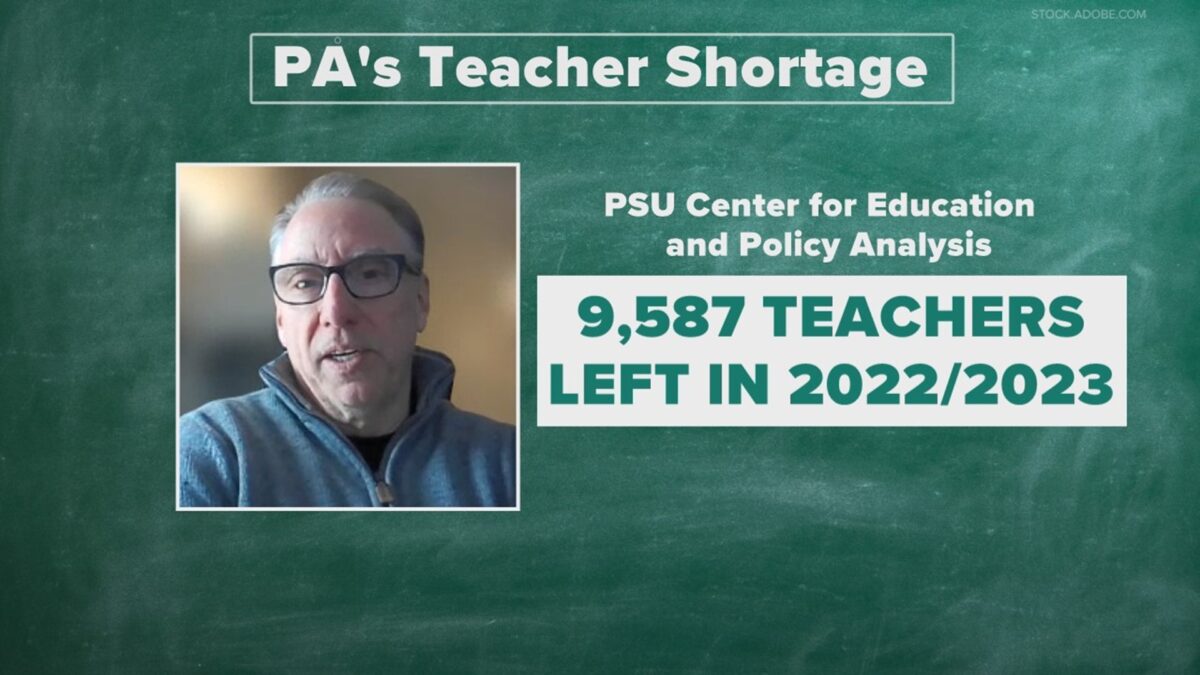
A Pennsylvania teacher shortage is prompting legislators to enact programs intended to keep teachers longer by paying them more money.
State Senator Vincent Hughes, who represents Philadelphia, is introducing the Student Teacher Stipend Program in 2024-25 which will pay student teachers $10,000 to $15,000 if they agree to work in high-needs districts, the Philadelphia Inquirer reported.
The agreement includes a promise to teach in the state for three years.
“If we want young people to stick around and be teachers in Pennsylvania, we’re going to need to pay them at least $60,000 a year to be teachers,” Hughes said.
Hughes pointed to pay raises, sign-on bonuses and grants for students who want to get into teaching. Some of those pay upticks could come from Gov. Shapiro’s $48.3 billion budget plan, which allocates an additional $1.1 billion for schools. Shapiro’s new budget proposal would add $5 million to the student teacher stipend fund.
Aaron Chapin, president of the Pennsylvania State Education Association, also wants higher starting salaries for teachers.
“We have a lot of school districts that are grappling from across the state, with having enough teachers having enough staff to fill all the positions that they need, so that we can take care of our kids,” Chapin said.
The fall saw widespread teacher vacancies in districts in every part of the state, in part because Pennsylvania issued its lowest-ever number of new teaching certificates in 2021-22, a 70% drop from 2011.
Recent research out of Penn State’s Center for Evaluation and Education Policy Analysis found that Philadelphia teachers leave the profession at higher than the rest of the state: 20% of charter teachers and 18% of district teachers left the profession in their first year.
After five years, the attrition rate dropped to 9% for district teachers but was 17% for charter teachers.
An SAT survey asks Pennsylvania high schoolers what field they plan to major in.
IN 2009, 11.2% said they were choosing education, but a decade later that number dropped to just 4.5%. That 6.7% decrease was by far the largest drop of all included majors in that time frame.

Penn State Professor Ed Fuller said both politicians and the public need to change attitudes if they want the problem to improve.
“We should be admiring these folks, we shouldn’t be calling them names or criticizing them,” Fuller said. “I was a teacher, it’s a really difficult job.”
The Penn State study can be found below:
For all the latest news, follow us on Facebook or sign up for Glenside Local’s “Daily Buzz” newsletter here.
Images: WPMT