
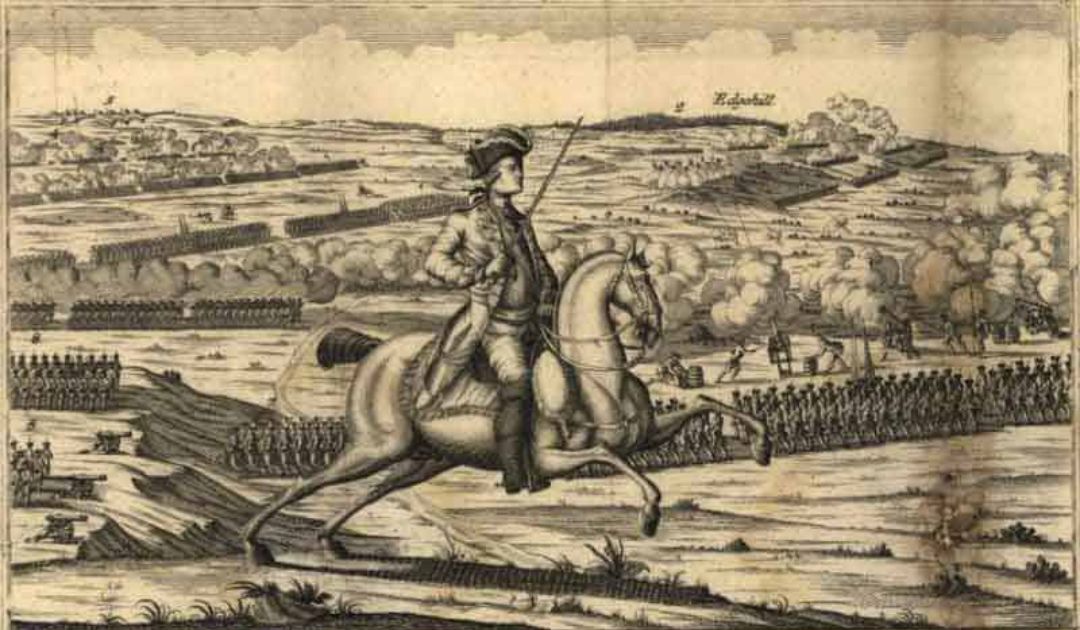
On December 7, 1777, the Battle of Edge Hill was already underway and Abington was a small village. Not uncommon for the time, its local inhabitants had mixed political views. Some were loyal to the British crown, others to the idea of American independence and the ideal of a new country.
Already in control of Philadelphia, the British were marching across the modern-day Philadelphia suburbs in an attempt to draw the Americans into battle before they could get to winter encampment. Dispatched troops moved toward Abington to take control of the heights of Edge Hill and Tyson’s Gap.
As the British marched up Old York Road, American forces led by American Dragoon cavalry fired upon them from fortifications around Abington Presbyterian Church, including the cemetery across the street which is still present today.
With the full weight of British and Hessian regiments bearing down, the Americans were forced to withdraw, effectively relinquishing the town. Lord Sir William Howe’s forces secured the area around Abington and by the afternoon of fighting, British General Lord Cornwallis was in Abington Village.
From Abington, the British would utilize Susquehanna Street Road to deploy troops against Washington’s forces on the heights of Edge Hill. During intense fighting, both Gist’s Militia and Morgan’s Rifle Corps established defensive positions atop Edge Hill and captured its heights and held it for much of the battle against the British.
After Howe made the decision to return to Philadelphia on December 8, his regiments withdrew from the Edge Hill Heights back through the Abington Village. General Washington dispatched units to reconnoiter, who clashed with a Hessian rear-guard before British artillery forced them to disengage as they retreated back toward Philadelphia.
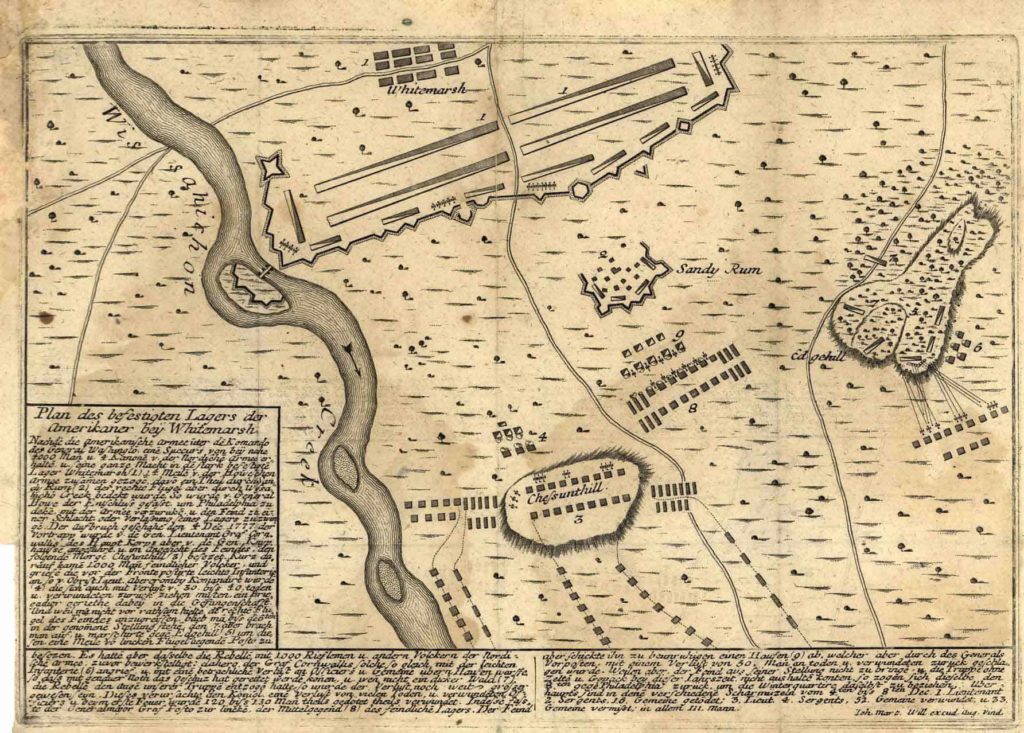
By the end of the Battle of Edge Hill, American Colonial Continental Militia held command of the battlefield.
Abington residents, who had just had a Revolutionary War Battle fought not far from their homes, were left to tend the wounded while the British and Hessian forces pillaged and plundered for food and supplies. On Howe’s march back to Philadelphia, some buildings were also burned in the modern-day suburbs.
In December 2023, Abington will receive a historic marker from the State of Pennsylvania in honor of the Battle of Edge Hill. In 2024, Abington Presbyterian Church will celebrate its 310th anniversary.
While it’s unlikely that capturing Abington was a priority for Lord Sir William Howe, the British still wanted to use its proximity to Old York Road and Susquehanna roads to keep a watch on Washington’s troop movements between the heights of Camp Hill and Edge Hill.
Aftermath
Washington was disappointed. “I sincerely wish, that they had made an Attack,” he wrote to Congress. “The Issue in all probability, from the disposition of our Troops and the strong situation of our Camp, would have been fortunate and happy.”
On December 8, Howe, realizing he can neither outflank Washington nor draw him into the open, marches back to Philadelphia.
On December 11, the Continental Army left White Marsh for Valley Forge.
The following April, Howe resigned his post and returned to Britain, and was replaced by General Henry Clinton. Following France’s entry into the war, the British evacuated Philadelphia overland the following spring, and while en route to New York City, they were attacked by Washington at the Battle of Monmouth.
For more on the battle, you can check out this Youtube video:
For all the latest news, follow us on Facebook or sign up for Glenside Local’s “Daily Buzz” newsletter here.
Information courtesy of local historian Michael Leibrandt; Images courtesy of revolutionarywar.us