
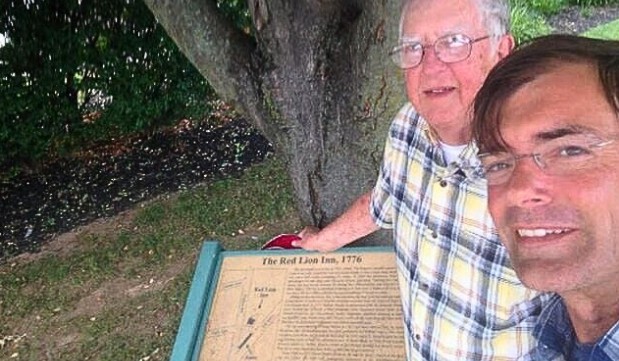
Michael Carolan, a descendant of some of Willow Grove’s earliest residents, published today an article in irishcentral.com titled “My Irish immigrant family’s first appearance on a US Census“.
According to the story, Carolan’s Irish-American ancestors (his third great-grandparents and their four children) were counted for the first time in the U.S. census on August 3, 1850.
“That’s when the Carolans had found the means to flee the greatest humanitarian disaster of that century—the colonization, occupation, starvation, and arguable genocide of an entire country: Ireland,” he wrote.
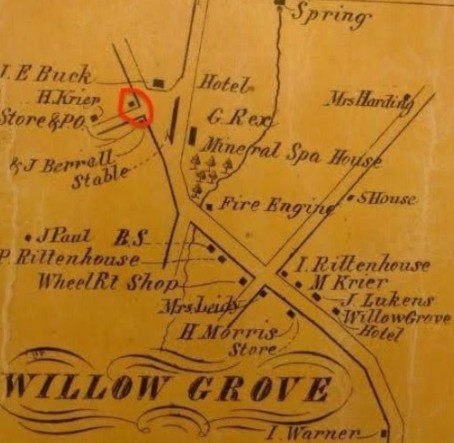
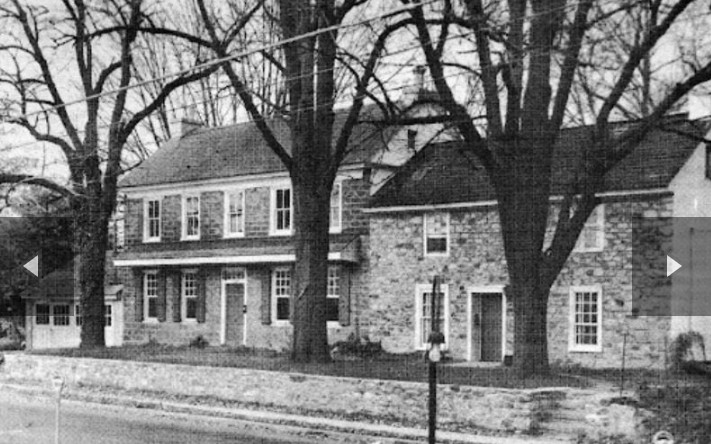
The author goes on to describe a past visit to the Willow Grove area to see the location of the family’s first U.S. home, which was across the road from the Manor House of Willow. The tour included the site of the former Red Lion Inn among other historical landmarks in Upper Moreland Township.
An excerpt:
My ancestors’ unremarkable village would become, a half century on, a remarkable place indeed. Legendary for its amusement park and as the “Music Capital of the World,” thanks to the son of Portuguese immigrants, the composer and marching band conductor John Philip Sousa. He performed regularly for a quarter of a century, his iconic American march, “The Stars and Stripes Forever,” first played here in 1897.
In 1992, on Anna Maria Isle, Florida, my grandfather’s sister, Ann Marie Carolan Moerk, told me that her grandfather, the Michael in our narrative, was a blacksmith and a horseshoer, as was her great-grandfather, Thomas—the “laborer” in Willow Grove. I would locate them all on the census at the National Archives the following year.
The Carolans chose the right spot to settle: The Old York Road was the I-95 of its day. With five daily stagecoach lines, it connected Philly with New York City. Work was plentiful. Just next door was that hotel, three-stories with 23 rooms and a long stone stable for up to a hundred horses. Nearby, the Mineral Springs Inn had similar capacity, and just around the corner was the forge of the noted village blacksmith, Isaac Rittenhouse.For all the latest news, follow us on Facebook or sign up for Glenside Local’s “Daily Buzz” newsletter here.
Images: Upper Moreland Historical Association, Michael Carolan