
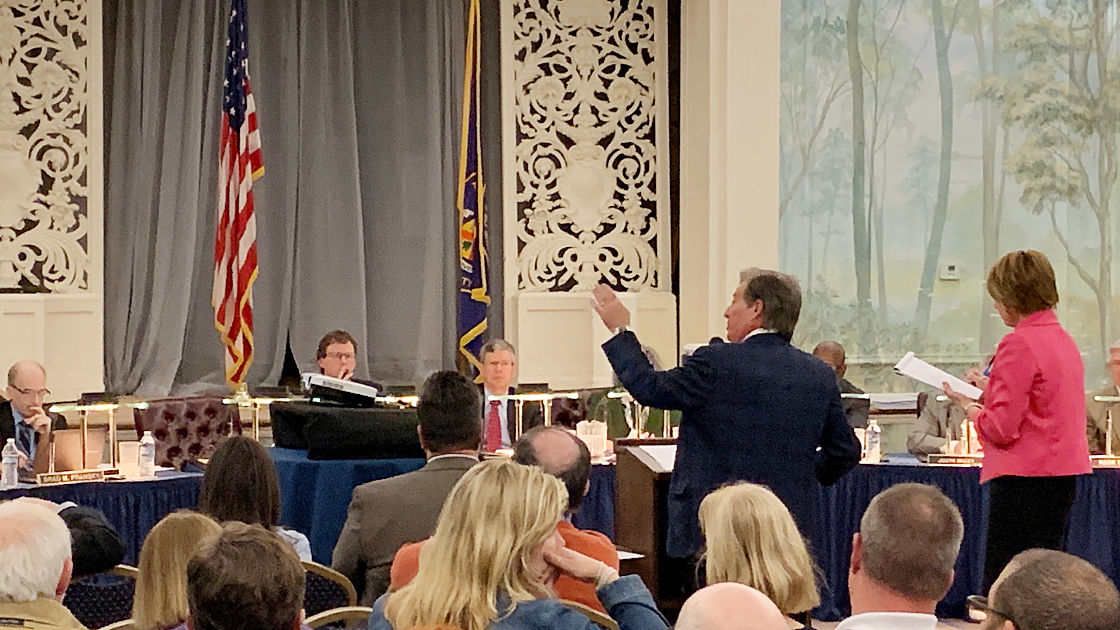
When you attend enough developer presentations, especially for controversial projects, you observe a similar pattern. It’s as if sprawl developers all share the same script that works to obfuscate the true nature of their intents. Having sat and listened now to dozens of these presentations, I can say with some authority that no one applies lipstick to a pig more expertly than Bruce Goodman.
Let’s get a couple of things straight right away. I welcome development. Behind my house are two 1980s-era office buildings that I pray get redeveloped into something more mixed use. I would welcome a corner store, a coffee shop, maybe some new apartments and upgraded offices — anything pedestrian friendly. Like most of us, my wife and I chose to live in a dense urbanized environment and accept and welcome all that fits into it.
Mr. Goodman’s stock and trade is sprawl. Measured strictly by square footage, Goodman Properties mostly builds parking lots with tiny, disposable buildings at their centers. They do so while coopting the terminology of sustainability. They twist the definitions of “walkability” and “beautification” and “substantial community investment”, which the uninformed gobble up like Sizzli’s.
What is it about Cheltenham’s business environment that seems to attract bottom feeders like Goodman Properties? What is Cheltenham doing to raise the value of doing business in Glenside instead of its cost?
Downtown Glenside emerged during a period where most people walked to their destinations or they took transit of some sort. I think it’s fair to say that anyone who moves to a place like Glenside values the type of community our predecessors left behind. Bigger houses on smaller lots close to the commercial districts create that charm that Glensider’s typically treasure and should protect from the Bruce Goodmans of this world.
Commissioner Drew Sharkey correctly points out that government’s role in this process is not to play gatekeeper. It is to ensure that builders build according to the rules already established. If the only option becomes a parking lot and the zoning allows it, then the Township can only guide the process, suggesting changes, and allowing residents to speak their minds. The Township cannot forcibly match or deny buyers and sellers.
At this point, Mr. Sharkey and his fellow commissioners might want to engage in some deep municipal navel gazing. Why, they might ask, is Wawa the best Cheltenham can do? What is it about Cheltenham’s business environment that seems to attract bottom feeders like Goodman Properties? What is Cheltenham doing to make its traditional districts more attractive to projects sensitive to that environment? What is Cheltenham doing to raise the value of doing business in Glenside instead of its cost?
The commissioners asked some good questions Wednesday night, but no one asked Mr. Goodman about the loss of real estate tax revenue that will result from this project. Consolidating six parcels into one will cut the appraised value of that site in half, and it will bring no net change to mercantile tax revenue. The Wawa won’t increase economic activity. It will displace it.
Wednesday night only started the process. Cheltenham Township now looks forward to months of hearings before the backhoes come. Having watched this process take place in communities all over region, the best thing this project might bring to Cheltenham is a better understanding that the process needs to change.