
The following was submitted to the Glenside Local by Ed Stevenson of the Abington Shade Tree Commission:
We’ve all watched a summer thunderstorm turn a quiet street into a rushing stream in just a few minutes. The sky darkens. The wind picks up. Rain pours from rooftops, races down driveways, fills gutters, and flows toward the nearest storm drain.
Where does all that rain go?
Most of us assume the answer is simple. Once the water reaches the street, it’s the job of pipes, storm drains, and detention basins to carry it away.
But long before much of that rain reaches the street, something exceptional happens.
It meets a tree.
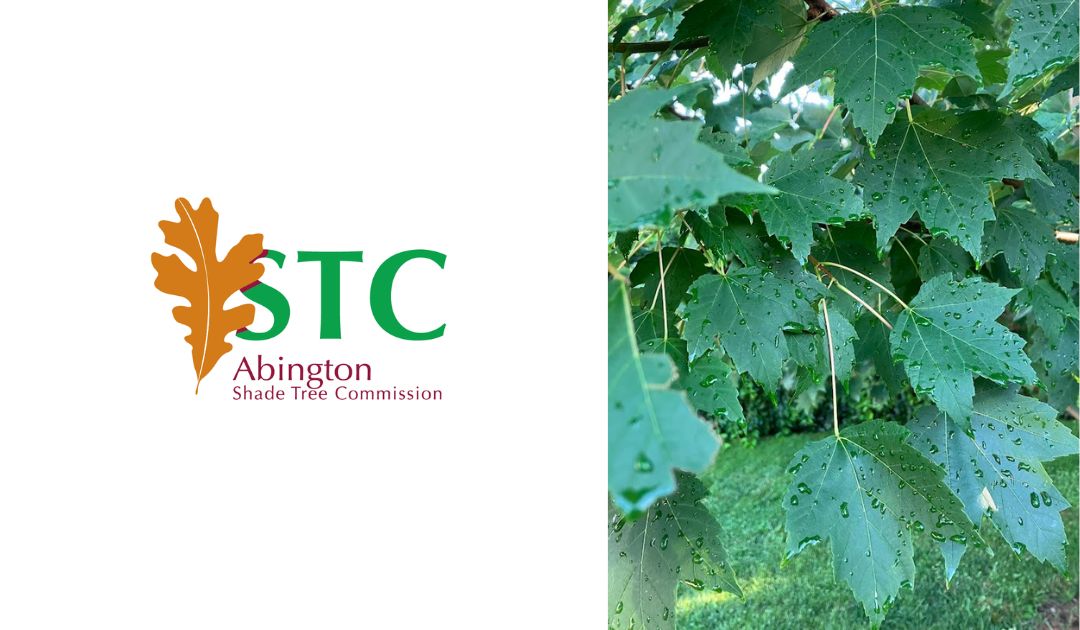
A tree’s leaves catch millions of raindrops before they ever reach the ground. Some evaporate back into the air. Others fall more slowly, giving the soil beneath the tree, and the tree’s roots, time to absorb them. Instead of rushing away all at once, the rain is slowed, spread out, and returned to the landscape naturally.
Roots also stabilize the soil – areas that have lost trees and other vegetation are much more prone to erosion, which in the extreme can become landslides.
Think back to the last heavy storm. Chances are you’ve noticed that some parts of Abington dry out surprisingly quickly, while others stay wet much longer. Many factors influence how water moves through a neighborhood, but mature trees are an important part of that story.
Here in Abington, our community’s tree canopy helps reduce stormwater runoff by an estimated 42 million gallons every year. No single tree makes that happen. But each one contributes a little. Together, they accomplish something beneficial to us all.
When a healthy tree is removed, the effects can extend well beyond the property where it once stood. When healthy trees disappear across a community, more rain reaches rooftops, driveways, streets, and sidewalks. The cumulative effect is that more water reaches our drainage system all at once, increasing the risk of localized flooding.
Every healthy tree that remains—and every new tree that grows to maturity—adds a little more capacity to this natural network that benefits the entire community.
“I think most people would be surprised to learn that trees are one of our first lines of defense against flooding,” said John Kennedy of the Abington Shade Tree Commission. “The moment it starts raining, healthy trees begin slowing the water down. Every tree may seem small on its own, but together they help make our community more resilient.”
The next time a summer thunderstorm turns your street into a rushing stream, take a moment to look up before you look down. Watch how the leaves catch the first drops and soften the downpour.
You may discover that one of Abington’s most effective defenses against flooding has been growing above our heads all along.
Under the Canopy is a column from the Abington Shade Tree Commission exploring the many ways trees quietly better life in our community. To learn more about the Commission, volunteer, or subscribe to its newsletter, email stc@abingtonpa.gov, visit www.abingtonpa.gov/stc, or follow Abington Trees on Facebook.
To access previous editions of Under the Canopy, you can click here.
For all the latest news, follow us on Facebook or sign up for Glenside Local’s “Daily Buzz” newsletter here.