Jenkintown Borough issued a notice on Friday regarding train noise concerns.
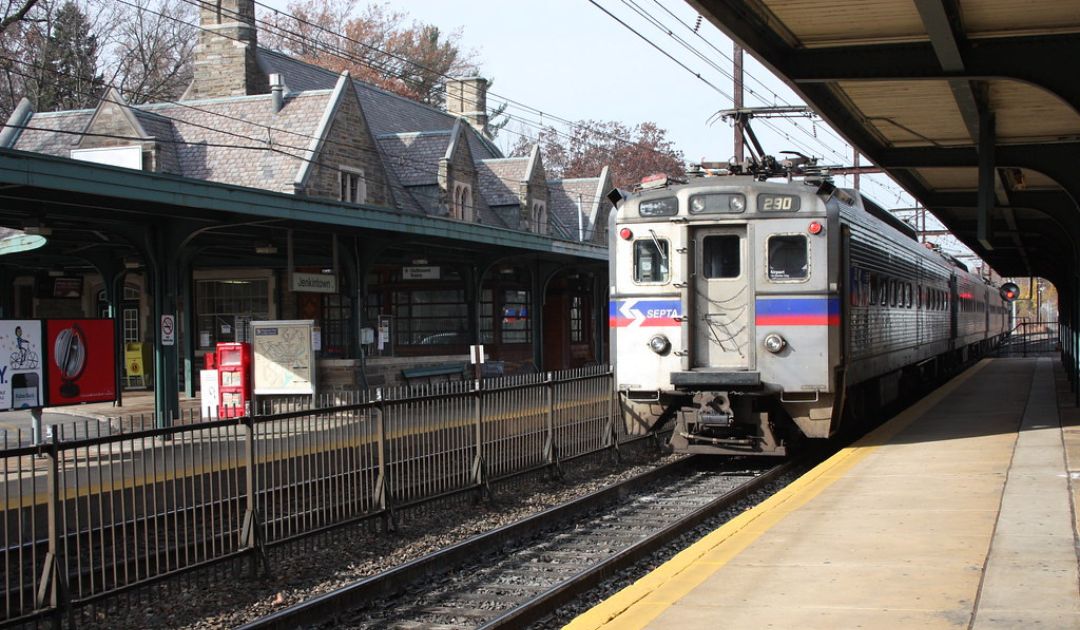
“As you are probably aware, living next to the railroad there are associated noise components that come with it,” the notice says. “Jenkintown Station is one of the busiest stations on the North side of the SEPTA system and sees 157 trains a day between 4 am and 1 am, while servicing the Lansdale/Doylestown, Warminster, Glenside, and West Trenton lines.”
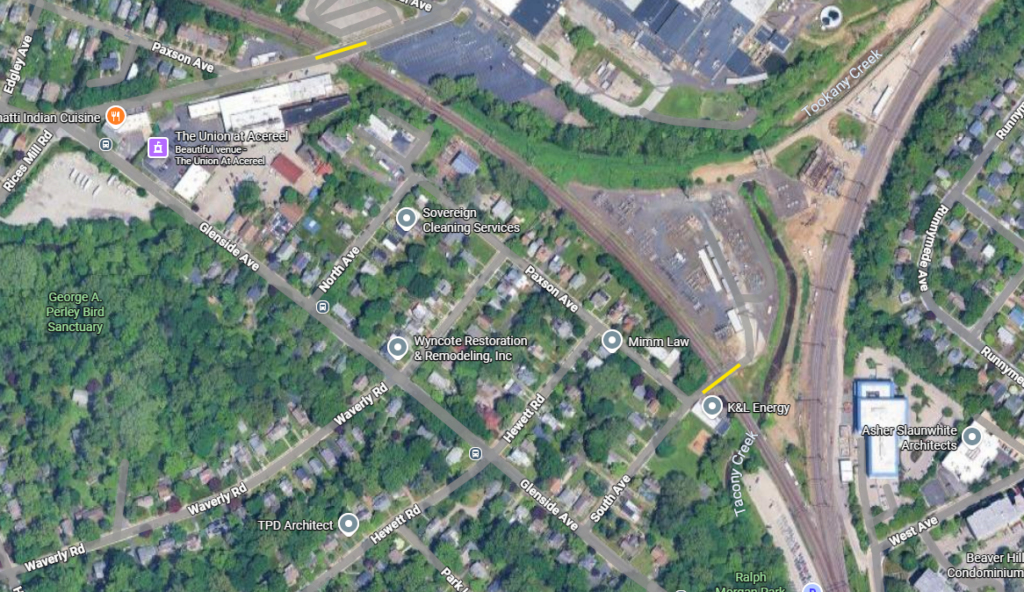
The notice says that two nearby crossings are within .4 miles and .7 miles north of Jenkintown station (highlighted in the image below):
- South Avenue which is an access road to the PECO substation.
- Rices Mill Road vehicle crossing
The notice continues:
With 2 crossings, that equates to 8 horn blasts per train. The scheduled first train is 4:25 am but the equipment move for this train is about 4:00 am. The last train of the night is 1:02 am with an equipment move back to the yard at 1:10 am.
It’s important to note that while the pattern is 2-1-1, the engineer must sound the pattern beginning 20+ seconds from the crossing until they occupy the crossing, so it may be repeated.
Also, the early morning trains going to Glenside that spin around for the Airport service do not make a station stop at Jenkintown and operate at 30mph through the station, therefore those trains need to start to sound the horn earlier than a train that makes a station stop to pick up or discharge passengers.
Finally, the trains that don’t blow the horn are likely those traveling on the West Trenton branch, which do not need to sound their horn for the 2 crossings mentioned above.
From the Federal Railroad Administration’s (FRA) regulations rule referenced below:
The Federal Railroad Administration’s (FRA) Final Train Horn Rule (49 CFR Part 222) requires trains to sound their horns in advance of a grade crossing. The rule is specific about the pattern, duration, and decibel level.
1) Locomotive engineers must begin to sound train horns at least 15 seconds, and no more than 20 seconds, in advance of all public grade crossings. SEPTA has designed its grade crossing arms and lights to activate 30 seconds in advance of a train entering a grade crossing.
2) Horns must be sounded in a standardized pattern of 2 long – 1 short – 1 long blasts. Based on train speed, the pattern must be repeated or prolonged until the lead locomotive or lead cab car occupies the grade crossing (the Rule does not stipulate the durations of the horns).
3) The maximum decibel level for the train horn is 110 decibels, and the minimum sound level is 96 decibels.
Train engineers sound horns at other times, including animals on the tracks, workers on the tracks, workers inspecting the tracks or signals, trespassers, people on the platform too close to the tracks, passing a standing train and so many other variables where the horn is needed. Also, in the overnight hours we have freight and work trains that may run occasionally that may need to sound their horn. All horn sounding events are covered by the Federal Rules and SEPTA/NORAC Operating rules.
The train horn is not automated, and each engineer must manually sound it to comply with the CFR to ensure they sound it in accordance with the regulation.
The FRA’s Train Horn Rule also created a process through which a municipality, or other public government entity, can apply to the FRA to designate a rail segment as a “Quiet Zone”. Establishment of a quiet zone is the responsibility of the municipality, not the railroad. SEPTA does not apply for or fund the study or installation of a quiet zone. SEPTA strongly believes that a fully signalized crossing coupled with train horns provides the highest level of public safety for pedestrians and motorists.
Communities interested in establishing a quiet zone must work through a process established by the FRA. Applicants must perform risk assessments and meet certain conditions prior to approval, and the cost and length of time needed to assess and design a quiet zone is unique to each location and operating environment. General information on quiet zones is available through the FRA and can be found at https://railroads.dot.gov/railroad-safety/divisions/crossing-safety-and-trespass-prevention/train-horn-rulequiet-zones.
For all the latest news, follow us on Facebook or sign up for Glenside Local’s “Daily Buzz” newsletter here.