

According to local historian Michael Leibrandt, the name Abington is of English origin from parishes formed more than 900 years ago in Northampton and Cambridgeshire in England.
The surname Abington was first found in Cambridgeshire among two villages: Little Abington and Great Abington. Both villages date back to the Domesday Book of 1086 and were collectively known as Abintone at that time.
The name’s etymology comes from the Old English personal name Abba + -ing (“belonging to”) + tūn (“enclosure; settlement, town”).

Montgomery County’s Abington Village was later called Mill Town, Shepherds, and Moorestown before the name Abington was resumed. The name Moorestown was derived from John and Mary Moore, owners of the tavern “The Square and Compass” at the corner of present-day Eckard Avenue and Old York Road.
The tavern served as a voting and meeting place until the building was demolished in 1887.
Fun fact: According to the 2010 United States Census, Abington is the 82908th most common surname in the United States, belonging to 227 individuals. Abington is most common among White (58.15%) and Black/African American (35.68%) individuals.
The Early Days of Old York Road
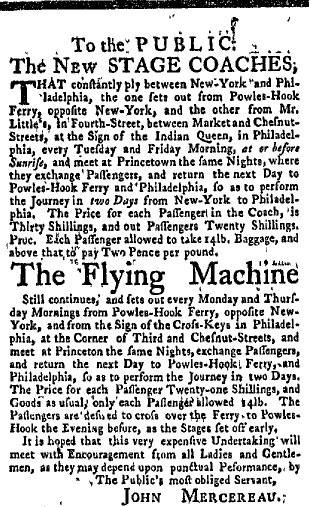
Old York Road was an original travel route for stagecoach lines running from New York City and Philadelphia, which began on a regular basis by the last quarter of the 18th century.
As turnpike companies took over and Old York Road improved its surface, it became feasible to offer stagecoach transportation. One of the earliest of these lines was the Swift-Sure Stagecoach Line that operated for over half a century until the arrival of railroads.
The road was originally constructed between 1711–1771 to connect the two major cities, which was the result of a petition made in 1693 by settlers in Cheltenham. The Provincial Council granted three: A road to Philadelphia, which became the lower part of York Road; a road to Germantown which became Washington Lane; and a road from Upper Dublin to Philadelphia which became Limekiln Pike.


Old York Road forks from PA Route 611 at the intersection with Easton Road in Willow Grove, a route that British soldiers utilized during the American Revolution on the march to surprise the Americans at the Battle of Crooked Billet. The part of Route 263 that deviates is still named York Road.
In 1697, the road from Susquehanna Street Road to Moreland Road in Willow Grove was laid out.
An 18th-century milestone in Abington Township still tells passing pedestrians, “9 to R S, 11 to P”, meaning nine miles to Rising Sun (the tavern and what was then the village around it) and 11 miles to Philadelphia.
Fun fact: Travelers on the Swift-Sure Stagecoach Line arrived in NYC from Philly in two days, earning the company the nickname “The Flying Machine.”
For more history, you can check out the Old York Road Historical Society’s website here.
For all the latest news, follow us on Facebook or sign up for Glenside Local’s “Daily Buzz” newsletter here.
Photos courtesy of Old York Road Historical Society