
Hi Abington Gardening Friends!
Before we dive into this month’s very special story, just a quick note that on Saturday, September 26 from 11 – 12 PM, I’ll be teaching a Pollinator Pathway class at Primex Garden Center.
Together, we’ll build out visual take home pollinator bed options that offer something useful across all four seasons for nature. We’ll look at plants that can work in different spaces, what they provide throughout the year and the bugs, birds and other creatures they may help you welcome.
You’ll leave with ideas you can adapt to your own space, whether you are planning a full garden bed or simply looking for the next plant in your pollinator pathway. You can register here: https://primexgardencenter.com/event-workshops-and-seminars/ Looking forward to meeting you!
Katie’s Garden
Last month, we discovered that our neighborhoods are full of backyard watering holes. This month, I want to explore another kind of connection happening between our gardens.
We often talk about the wildlife that can move from one yard to the next. A hummingbird visits your cardinal flower, flies across the street to someone else’s coral honeysuckle vine and then continues through the neighborhood looking for its next place to eat. But plants, ideas and enthusiasm can travel too.
One person grows a plant, divides it and passes it along or shares some seed (more on seeds next month). A neighbor notices more butterflies in a garden and decides to add that same plant to their own yard. A child learns that a beetle depends on one particular plant and begs their parents to buy one for their yard. That is how a garden can grow far beyond its own property line and Katie Fisk’s garden might be one of the best examples I have seen.
Neighborhood Notes
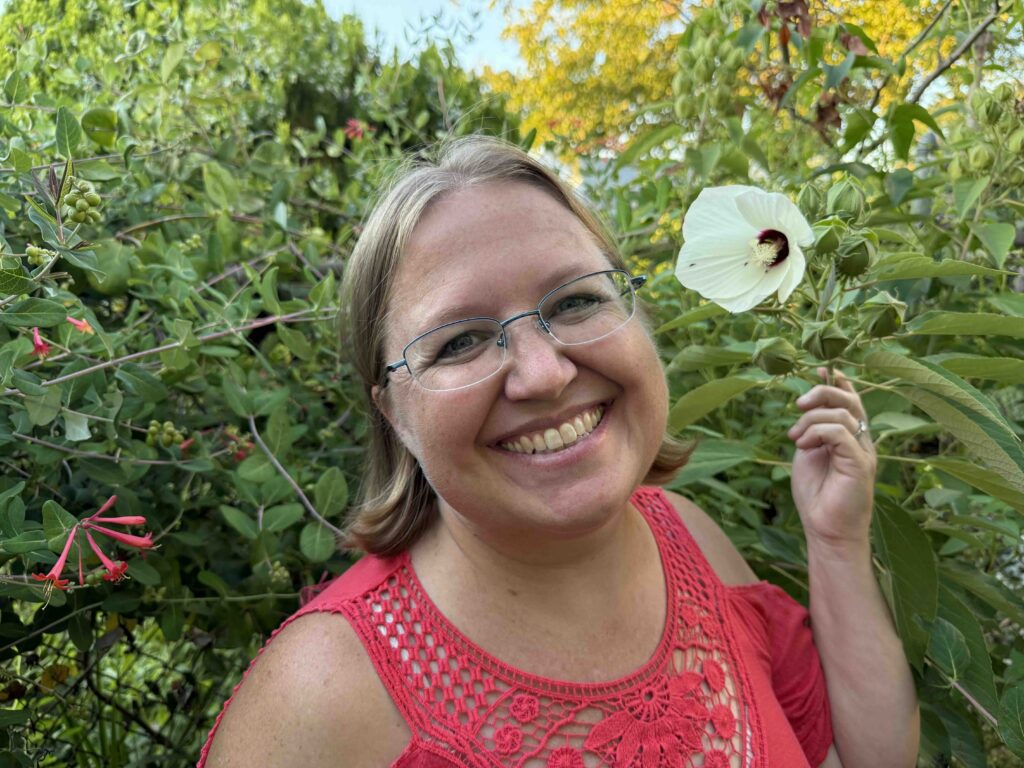
This month’s Neighborhood Notes takes us a little beyond our usual neighborhood boundaries to visit Katie in Bensalem, but for a very good reason.
Katie doesn’t live in Abington Township, but her work and influence are deeply connected to our community. For the past 17 years, she has worked at Briar Bush Nature Center in Abington, helping children and adults learn about the bugs, birds, animals and plants living around them. She also gives talks, supports native plant sales and works to make native gardening feel less intimidating and more achievable.
Her Bensalem garden is where many of those ideas are tested, observed and shared. You know you have arrived at Katie’s house when the ordinary suburban landscape suddenly gives way to tall flowers, grasses, signs, paths and an astonishing amount of life.
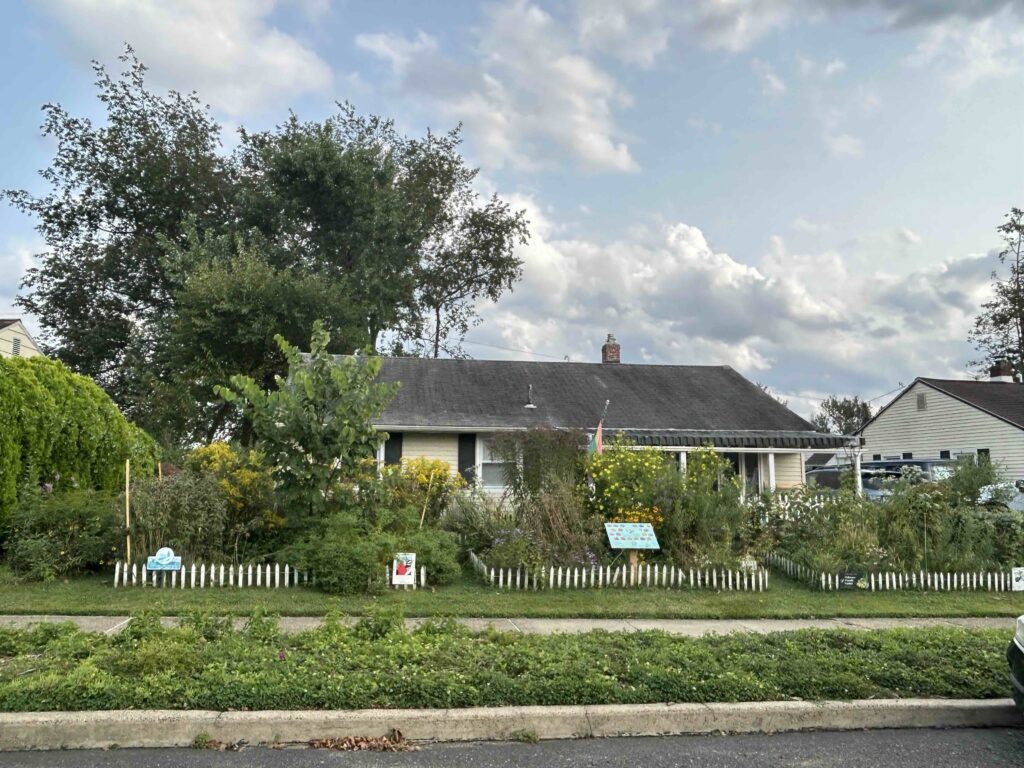
Katie Fisk’s front yard complete with fencing and signs to show intentionality.
Katie lives on a tenth of an acre in a fairly typical Bensalem neighborhood near Northeast Philadelphia Airport. Her house is a rancher, and many of the surrounding properties have the lawns and traditional plantings you would expect to see. Katie’s property is different. She describes her garden as a mullet: meadow in the front and forest in the back.
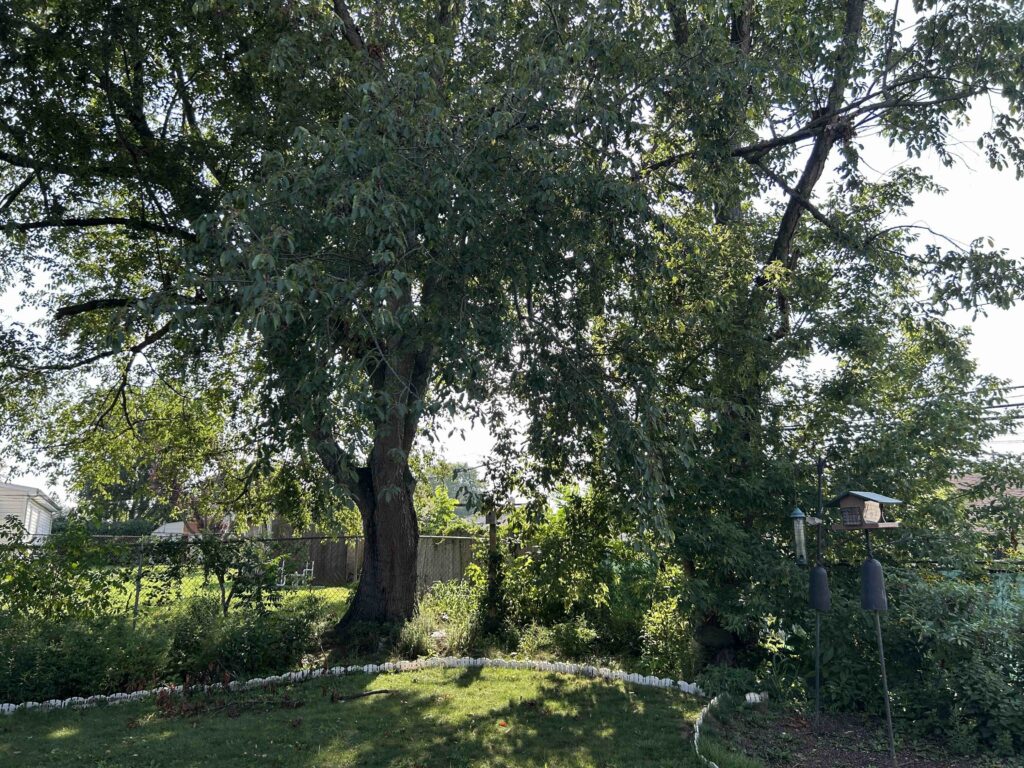
Katie’s back garden full of native trees and plants that thrive in shade.
The front yard is divided into several large, defined beds filled with native plants. There is milkweed, mountain mint, coneflower, phlox, grasses and far more plants than I could identify without help. Short fences and mowed paths provide what Katie calls “cues to care” or visual reminders that the garden is intentional, managed and very much loved.
The backyard sits beneath mature trees, with native shrubs, vines, flowers, water and shelter layered underneath. Altogether, Katie estimates that she grows around 180 native plant species. That sounds like the garden of someone who has always known exactly what she was doing. It isn’t.
Katie has an undergraduate degree in wildlife biology and a master’s degree in environmental education and interpretation, so she certainly started with more biological knowledge than most of us. But she did not begin with an encyclopedic knowledge of native plants.
“I am always ‘discovering’ new native species, and I’m always learning from other gardeners,” she said.
That constant discovery is one of her favorite parts of gardening. She especially loves finding insects that have very specific relationships with plants.
During my visit, Katie showed me an iridescent dogbane beetle, which she declared the most beautiful beetle in Pennsylvania. The beetle depends on dogbane, with the adults eating its leaves and the larvae feeding on its roots. Monarchs and milkweed may get much of the attention, but Katie’s garden is full of other small, specialized relationships happening around us all the time.
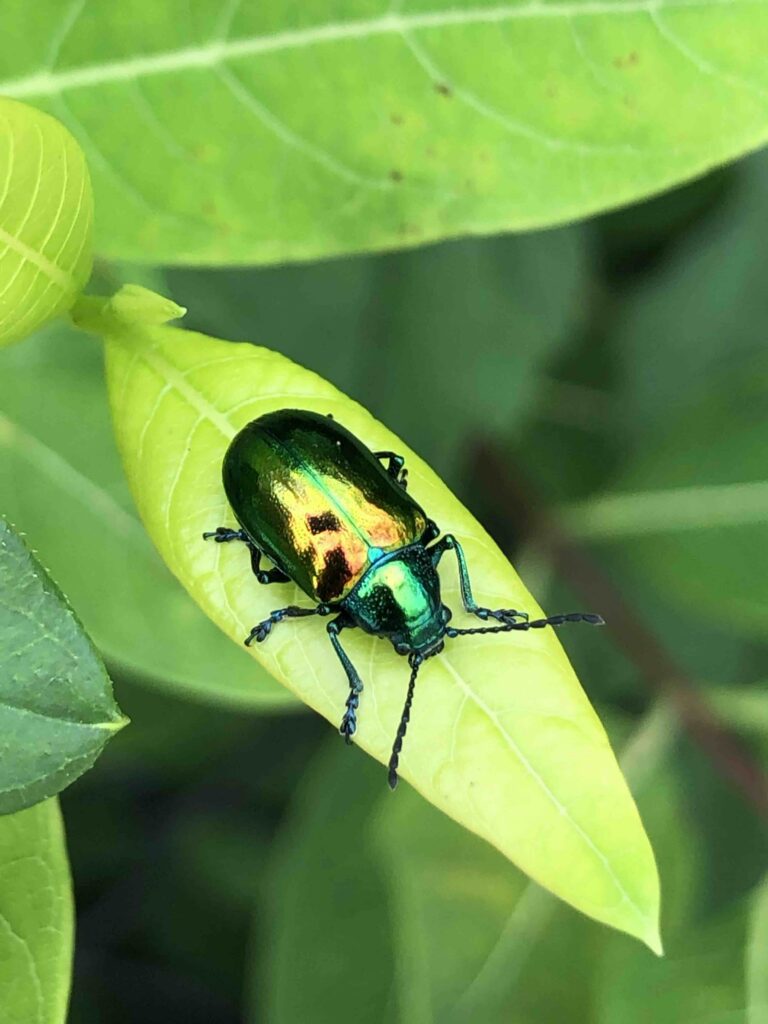
The Dogbane beetle relies on the Dogbane plant for its entire lifecycle. Grubs feed on the roots while adults eat the leaves.
Creating curiosity instead of conflict
Katie began removing grass within a week of moving into her home. As she dug her first small bed, neighbors stopped to introduce themselves and ask what she was doing. That gave Katie an opportunity to explain that she was planting native perennials that would return each year, require less water and fertilizer once established and welcome birds, butterflies and other creatures.
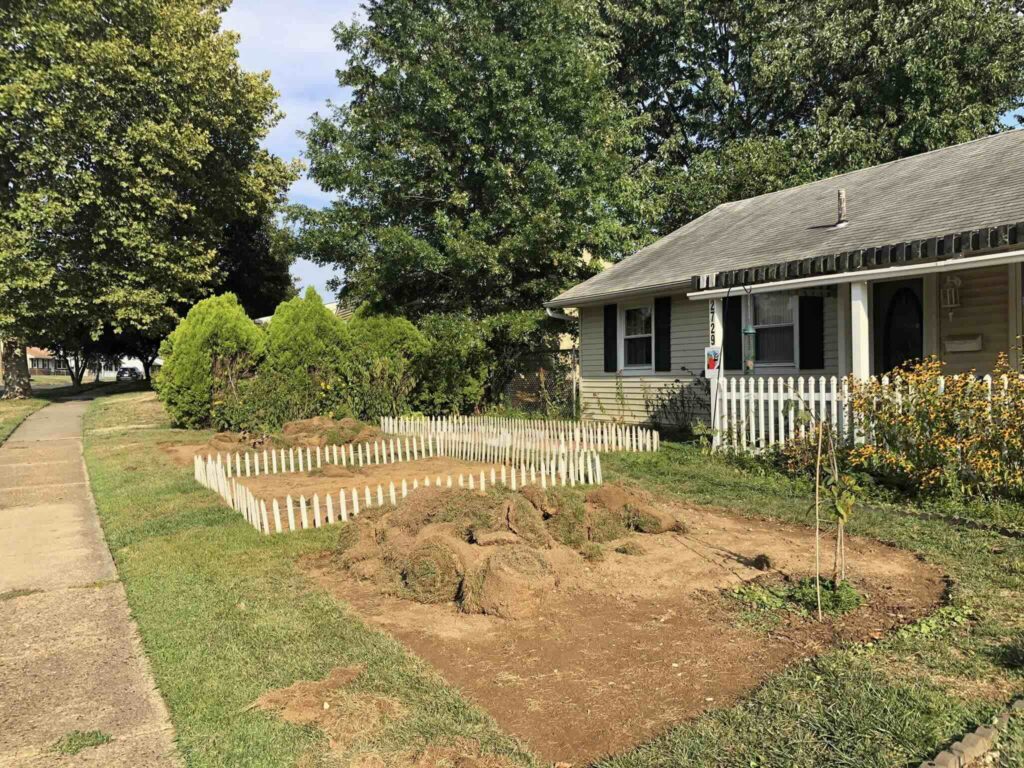
Katie’s lawn after removing most of her grass. This was a week after she moved in.
She wasn’t telling her neighbors that they needed to change their lawns. She was showing them what she was trying in hers. That distinction matters to Katie.
“You’re not going to get anybody interested in native gardening by shaming them and telling them that they’re a terrible person,” she said.
Native gardens can look unfamiliar, especially when people are accustomed to clipped shrubs, open mulch and grass. Katie has worked to make her garden understandable to the people around her. Signs explain why leaves remain in place, why pesticides are avoided and which plants support certain creatures. A large interpretive panel identifies many of the plants growing in the front yard and explains what they provide. Most importantly, Katie talks to her neighbors.
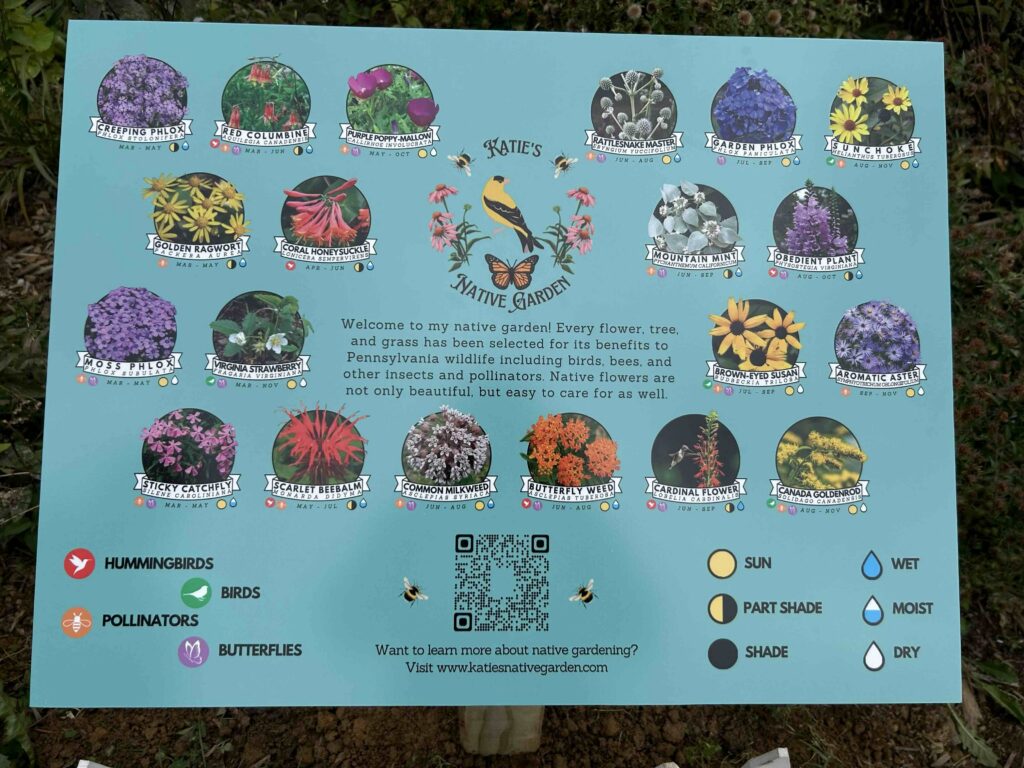
Interpretative sign in Katie’s garden educating neighbors about the plants.
The hummingbird pathway
One of Katie’s neighbors is a photographer. Katie invited her to come into the garden whenever she wanted to photograph butterflies, bugs or flowers. Katie also shared plants with her, including a native coral honeysuckle vine.
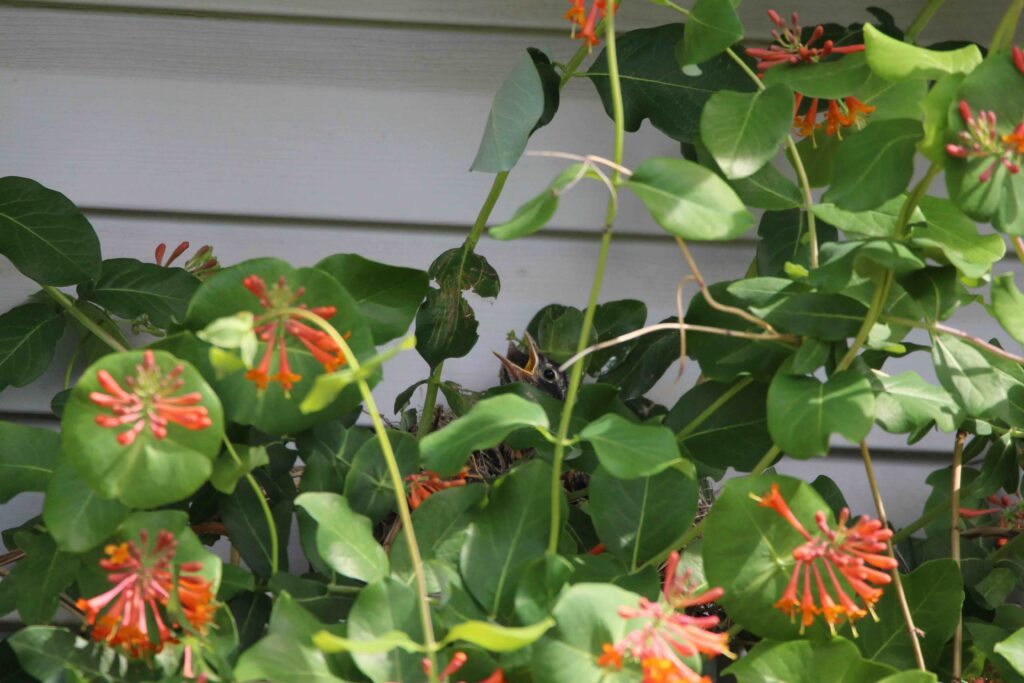
Katie’s neighbor’s native honeysuckle vine provides a home for a robin’s nest.
Her neighbor later told Katie that, despite living there for years, she had never seen a hummingbird on her property. After planting the coral honeysuckle outside her office, hummingbirds began to visit. Now Katie can sometimes watch a hummingbird feed in her garden and then fly across the street to her neighbor’s plant.
Every once in a while, Katie texts her: “My hummingbird’s coming your way.” Her neighbor now buys additional plants from native nurseries, and Katie continues to share plants with her. What started in one garden has become a small pollinator pathway across the street.
Another neighbor has a beautifully maintained lawn that is watered, aerated and treated. Katie has never criticized his lawn, and he has never criticized her garden. He did, however, ask questions. He approached Katie for a native plant recommendation for a difficult, dry area in his backyard. She suggested moss phlox. Katie doesn’t know whether he ever bought it. That isn’t really the important part.
“The fact that he asked that question was just like a breakthrough moment,” she said.
A garden built to be shared
Katie estimates that between 65 and 70 percent of the plants in her garden were free. Some came from friends, while others came through native plant swaps and gardening groups. As people divide established plants or discover volunteers appearing in unexpected places, those extras can move into someone else’s garden. Now Katie has enough plants to return the favor.
“Come over to my house,” she tells people. “I will send you home with plants.”
I’ve lost count of how many Abington gardeners I’ve spoken to who have gotten plants from Katie and on my visit, I was no exception. This generosity makes gardening more accessible.
She also supports native nurseries and nonprofit plant sales and encourages new gardeners to visit them. Plant sales are not just places to buy something; they are places to ask for help. Tell someone you have shade, that you want hummingbirds, need something short or have a patch that stays wet. As Katie says, plant people generally love talking about plants. Give them a problem, and they will happily become your personal shoppers. Something which plays out regularly at Primex Garden Center with their helpful staff guiding you on your plant journey.
From one garden to a future book
Katie also gives lectures and presentations about native gardening. The comments that mean the most to her come from people who say they had wanted to start but felt intimidated. Some tell her she made them believe they could do it. Katie calls herself a “native gardening motivational speaker.”
That is also the role she hopes to play through a forthcoming book, Grow a Native Garden coming in spring 2028. There are already excellent books explaining why native plants matter. Katie wants to help answer the question that comes next: How do I actually begin?
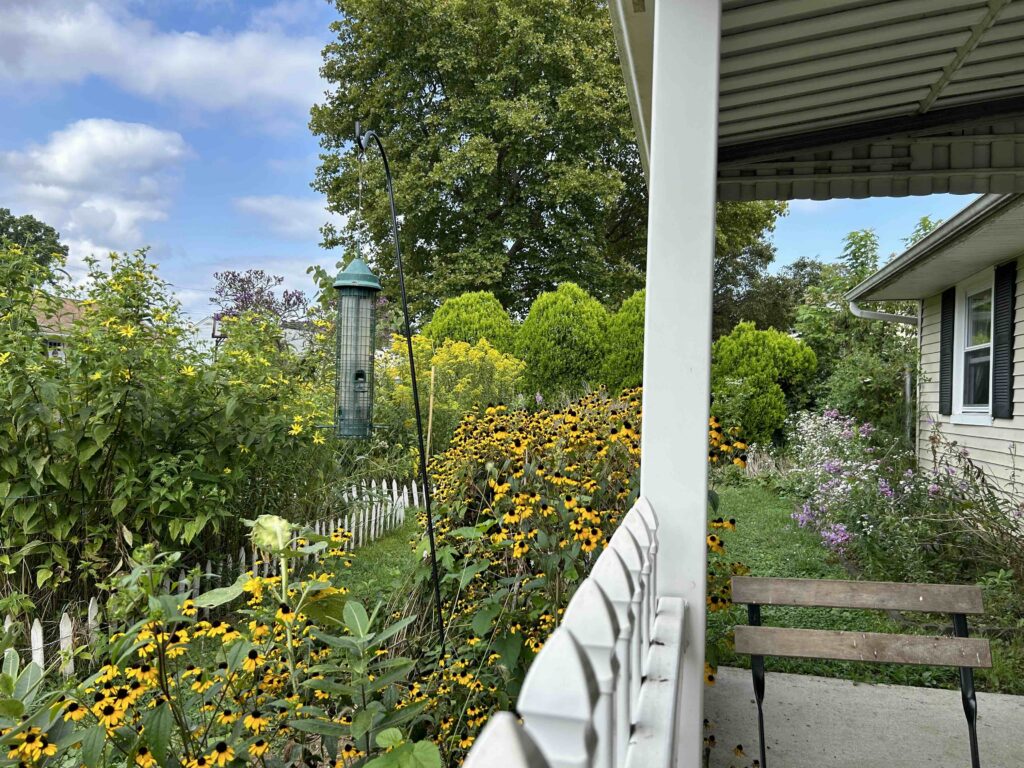
One of many images of Katie’s garden that will be in her new book coming out in spring 2028.
Her approach is practical and flexible. Your garden does not have to look like hers. It can be very neat and manicured. It can fill the yard, occupy one bed or live in a collection of containers. You can begin by removing invasives, replacing one familiar shrub or choosing two or three plants that support something you want to welcome.
“You don’t have to go crazy,” Katie said. “You can have it be super manicured and still have a benefit.”
Katie’s garden may occupy a tenth of an acre in Bensalem, but its impact has already grown well beyond her property line and her own neighborhood.
Your turn
I usually ask you to share something with me here, but this time I’m going to ask you to share, connect or follow Katie Fisk’s adventure right here on Facebook. You can read more on her website katiesnativegarden.com and see the paradise she is building, one plant at a time. Well, maybe lots of plants at a time, but she’s always open to sharing. Thanks Katie, you’re amazing!
Yours in mediocrity,
Edel
For more editions of The Mediocre Gardener, you can click here.
For all the latest news, follow us on Facebook or sign up for Glenside Local’s “Daily Buzz” newsletter here.