
Hi, Gardening Friends!
Last month, we talked about getting our gardens through the heat. This month, I want to share about helping everything else that is trying to get through it too. Birds need water, bees and other insects do too, frogs, squirrels, chipmunks, foxes and all other creatures passing through our yards, especially during the hottest, driest stretch of summer.
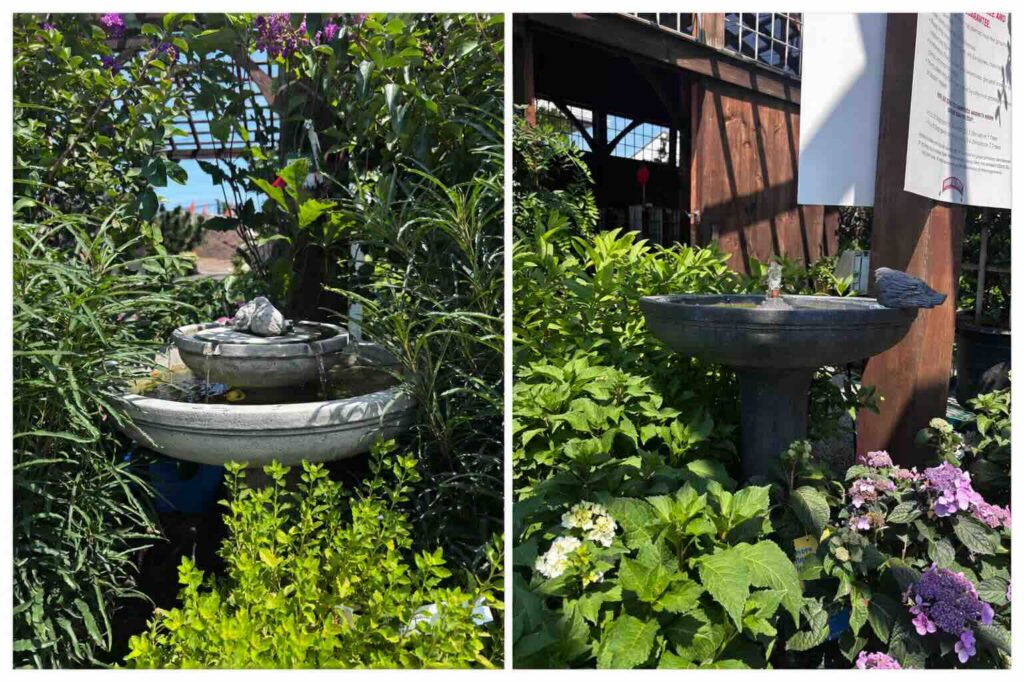
Water features nestled in the plants at Primex Garden Center.
I originally planned for this column to be an explainer of what types of water you can provide with a little window into the world of one of your neighbors who has a wildlife pond, Clarissa from Glenside. I thought I would find one person with a bee or insect bath, take a picture, offer a few tips and remind everyone to keep the water fresh.
Then I posted in the Abington PA Free Gardening Community and Share Facebook group. I asked whether anyone had a small water source for insects and suddenly my neighbors were showing me ponds, birdbaths, rain gardens, rain barrels, plant saucers, water bowls and an occasional flooded backyard complete with a swimming duck! It turns out we have created a whole network of neighborhood watering holes without realizing it.
And in very Mediocre Gardener fashion, there is no single correct way to do it. You do not need a perfect pond with a waterfall and carefully positioned rocks. You can start with a shallow plant saucer and a stone. And I will admit, after visiting Clarissa’s wildlife pond, I did briefly start wondering where I might fit one in my space.
Just add water
Adding water to a garden can be one of the simplest ways to make it come alive and sound alive. Birds need it for drinking and bathing and insects may stop at shallow water to drink. The important thing is making the water accessible and reasonably safe. For a small water source, that can mean using a shallow bowl, dish or plant saucer rather than something very deep. Add a few stones so that bees, butterflies and other insects have somewhere to land without falling into the water.
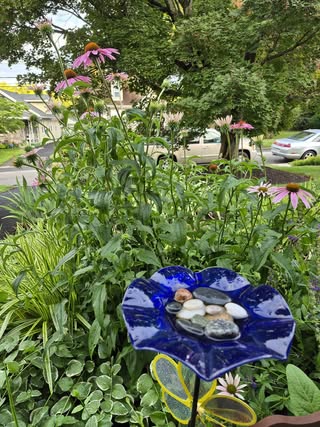
Carol from Abington shared a simple shallow container with stones that support insects in her garden.
For birds, a shallow birdbath can work beautifully, no need for anything elaborate. Several people in the gardening group told me they use ordinary plant saucers and refill them regularly. Anne in Jenkintown keeps two 16-inch saucers on her deck and adds a rock to each one so insects have a foothold. She said she has been amazed by how many birds stop by for a splash.
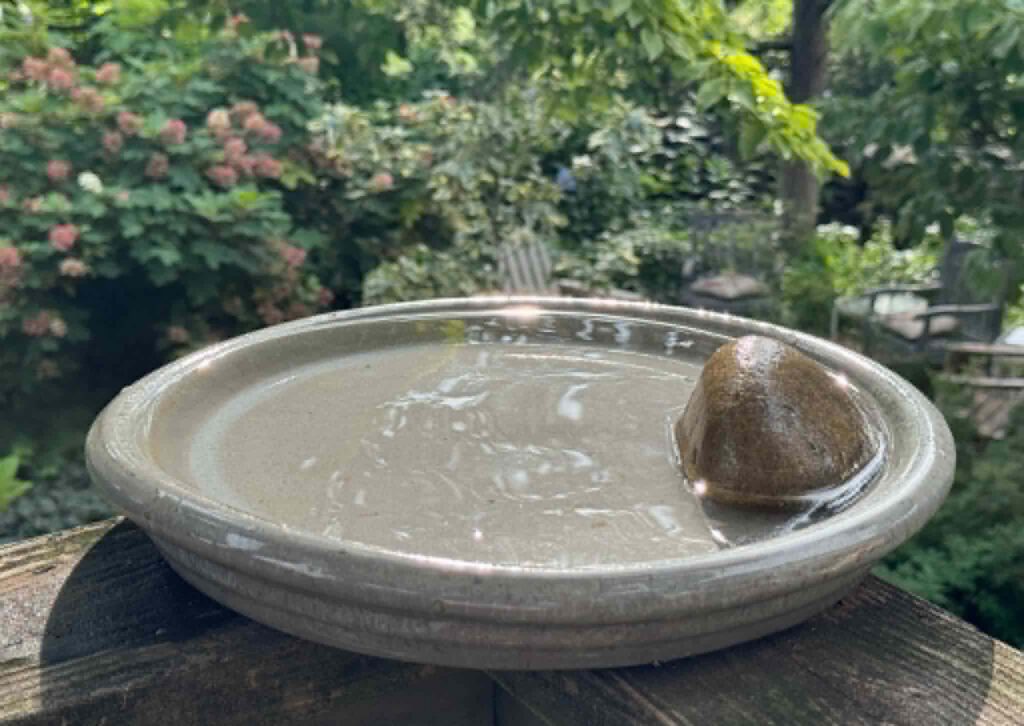
Anne’s shallow bird oasis on her deck.
Mary from Elkins Park places bowls of water around her garden and refreshes them daily. She has noticed another unexpected benefit: thirsty creatures seem less likely to bite into her vegetables when water is available elsewhere.
Not every garden water source has to be designed from scratch. Jennifer in Elkins Park uses a stone that came from her grandmother’s garden. The stone was originally found in the woods across the street from her grandparents’ home and has a naturally hollowed center. It now holds water for birds while also preserving a piece of family history.
“I love having it in my garden,” Jennifer said.
And Karen in Cheltenham keeps a traditional birdbath clean and filled and says it gets a lot of use. She has tried other water features, including saucers with small solar fountains, but the birds still seem to prefer the original birdbath. There are even occasional squabbles over it. Apparently, even birds have opinions about which neighborhood pool is best.
Keep it clean
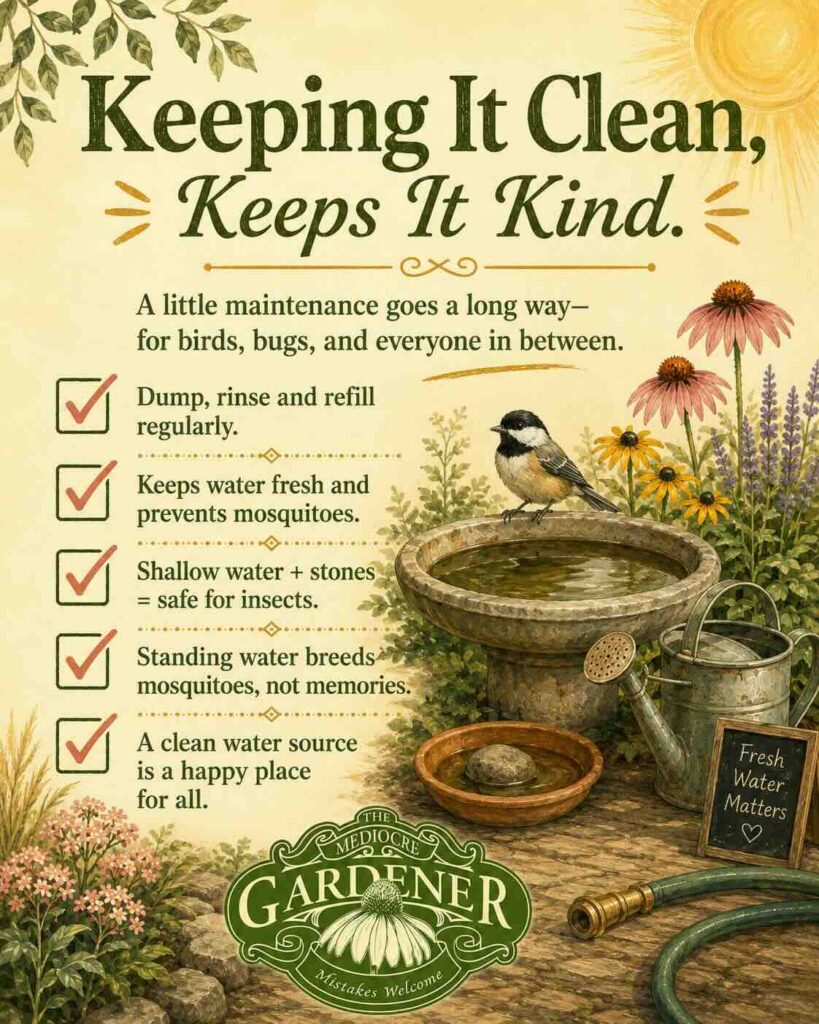
Standing water can become unpleasant fairly quickly in August, so small bowls and birdbaths should be dumped, rinsed and refilled regularly. This also helps prevent mosquitoes from completing their life cycle in the water. Mosquitoes need standing water to breed, so a forgotten bucket or clogged container can become much more useful to mosquitoes than it is to birds.
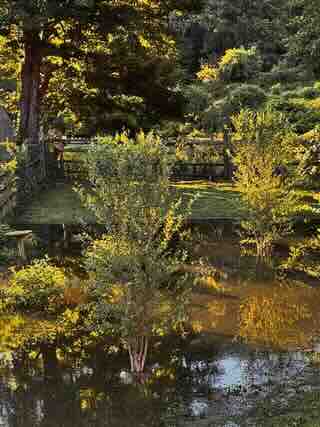
Some of the most interesting responses I received came from people who had not deliberately set out to create a wildlife water source. They were trying to manage the water already moving through their yards. Kelly in Glenside’s yard used to flood regularly, so her husband, Mike, dug a large round basin lined with stones and added a ditch or stream-like extension that fills when water levels are especially high. The original goal was water control, and it has made a major difference. But the area has also become habitat for bugs, birds, frogs and even snakes. Kelly said moving the water farther away from the house also seemed to reduce the number of mosquitoes gathering near where the family spends time. They use mosquito dunks in the pond to help manage mosquito larvae without harming the other wildlife using the water.
Sherry from Elkins Park also lives in a floodplain. This year, instead of continuing to fight the wet conditions, she planted river birches and red osier dogwoods, plants that are much happier with moisture than a typical lawn. When the first flood arrived, the plants thrived. The birds loved it and one evening, there was a duck swimming in the yard. I love this because it is such a good gardening lesson. Sometimes the answer is to notice what the land is already doing and plant accordingly.
Sharon in Glenside has a rain garden and pondless waterfall that gives birds and small animals somewhere to drink. But Sharon also described it as “a major source of pleasure and relaxation for humans.” That part matters. We talk a lot about what our gardens provide for wildlife, but water changes the experience of a garden for us too. It gives us something to watch, listen to and makes us pause. Or, in my case, it gives me one more reason to wander outside when I should be doing something else.
Neighborhood Notes
This month’s Neighborhood Notes comes from Clarissa in Glenside, whose backyard wildlife pond has become a community pool, local watering hole and outdoor science lab all at once. Clarissa grew up in a family of gardeners. Her great-grandmother and grandmother spent much of their time outside, and she remembers gardening as both their exercise and their artistic expression.
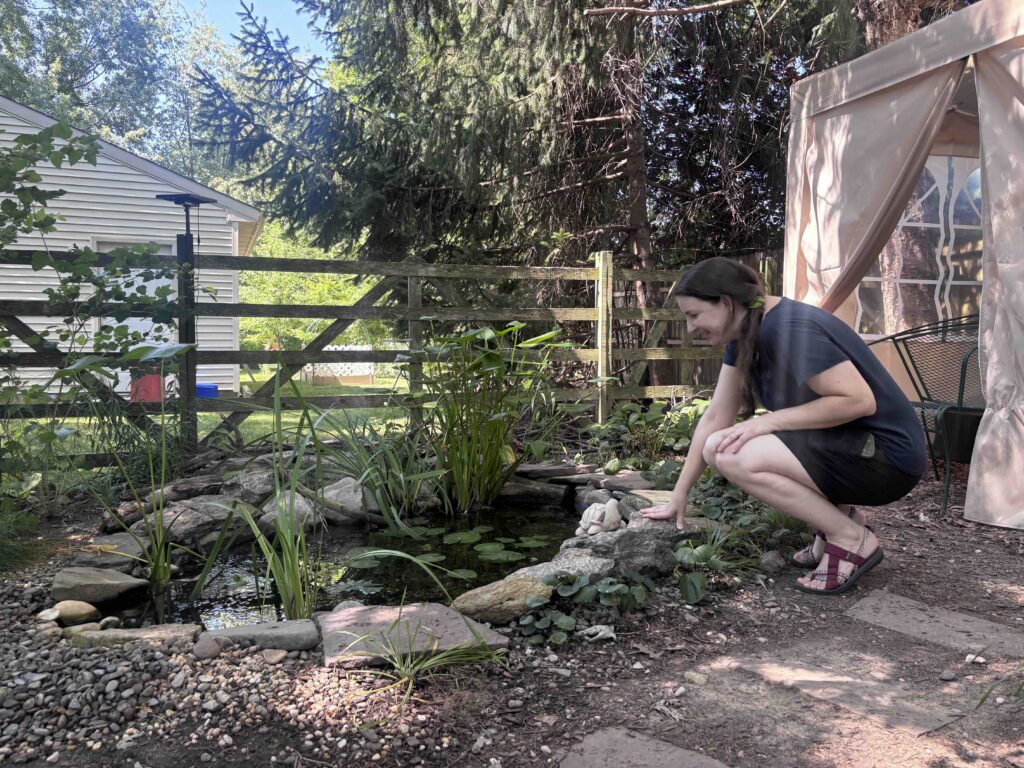
Clarissa checks on her wildlife pond daily.
When Clarissa had a yard of her own, she knew she wanted to garden for wildlife. At first, like many of us, she chose anything that flowered or produced fruit. She planted things that looked useful without fully understanding the relationships between plants and the creatures that depend on them. Then she visited Collins Nursery, a native only nursery that used to be in Glenside but is now at Temple Ambler Arboretum. Clarissa saw what a native plant garden could look like. She began adding milkweed and saw monarch caterpillars. She planted shrubby St. John’s wort and watched it fill with more bumblebees than she had ever seen in one place. Once that life arrived, the goal of the garden changed.
“There was somewhere that said the thing that a lot of people were missing in a garden was movement and life,” Clarissa said. Then she set her heart on building a pond, but she wasn’t interested in keeping koi or taking on a system that required constant pumping, cleaning and chemical treatments. She wanted something that would work with nature.
“I want things that, once I put them in and establish them, do their thing,” she said.
After reading about wildlife ponds, Clarissa designed one with gradual shelves, carefully placed rocks and one deeper area. The structure gives animals several ways to enter and leave the water rather than creating steep, slippery sides. A branch stretches into the pond as an additional escape route in case a mouse or another small creature falls in. The pond is planted with native aquatic plants, including pickerelweed, native iris, Virginia water lily and hornwort. There are snails, green frogs, bullfrog tadpoles and countless birds.
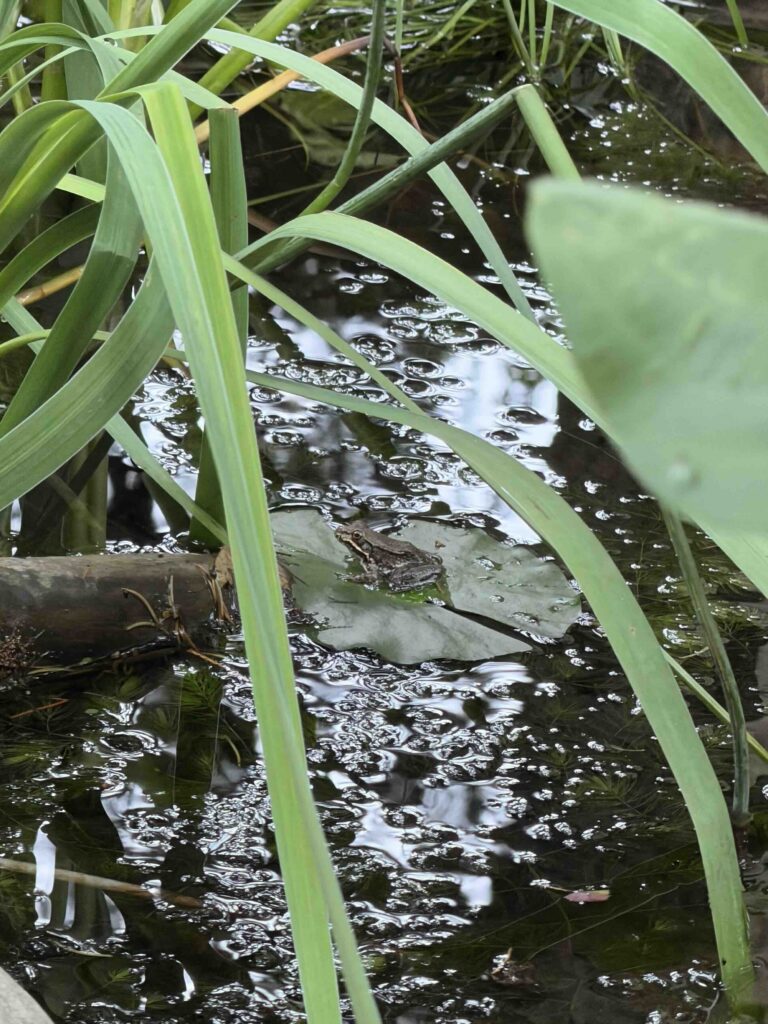
Frogs are regular visitors and residents in Clarissa’s wildlife pond.
“On a hot day, the pond is like the community pool for birds,” Clarissa said. “You can’t look out the window without seeing at least three birds in it at all times.” A motion-activated wildlife camera showed her what happens after dark. Foxes stop by almost nightly. Raccoons visit and attempt to catch the snails. Other creatures drink and move on without Clarissa ever knowing they were there.
“It is the local watering hole for a lot of creatures that I otherwise would never see,” she said. The pond has also become one of her daughter Vivienne’s favorite places.
Vivienne likes what she calls “pond science.” She collects samples of pond water to see what is living in it. She watches the tadpoles. She pointed out tiny frogs camouflaged against logs and rocks. She showed me snails and possible eggs attached to algae. Watching Vivienne explore the pond made it clear that Clarissa has created more than a water source. The pond is habitat, but it is also a place of discovery. It gives her daughter the chance to watch a small ecosystem develop in real time and it gives the whole family a reason to spend more time outside.
Your turn
Do you have a birdbath, pond, rain garden, water bowl or other watering hole in your yard? Who uses it? Did you create it deliberately for wildlife, or did the wildlife arrive after you were trying to solve another problem? Or have you thought about adding one? We’d love to add it to the list of the network that we’ve found so far.
Just as a reminder too, I’m working on a companion podcast for this Mediocre Gardener column, and I’d love to gather as many stories as possible from you, my wonderful gardening friends right here in Glenside, Jenkintown, Elkins Park, Roslyn, Abington and Wyncote. Introduce yourself by emailing dearmediocregardener@gmail.com. I’m standing by and excited to hear from you!
Yours, as always, in mediocrity,
Edel
For more editions of The Mediocre Gardener, you can click here.
For all the latest news, follow us on Facebook or sign up for Glenside Local’s “Daily Buzz” newsletter here.