
The following was submitted to Glenside Local by Edel Howlin:
With a Little Free Library logbook, kid-friendly plant guides, and a connection to Primex, one local garden is turning native plant education into a neighborhood experience.
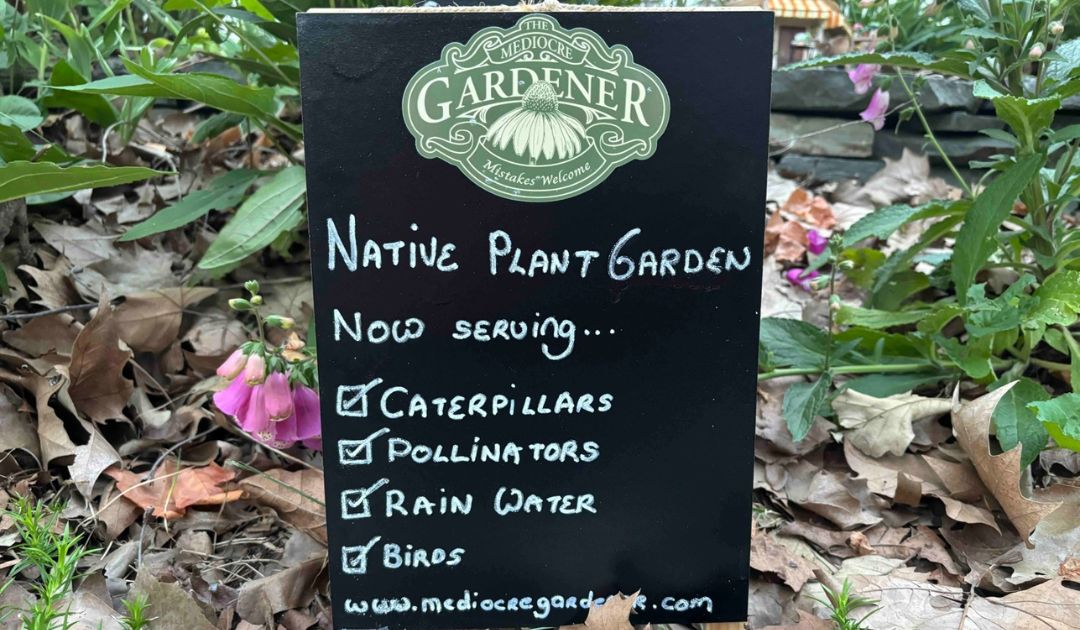
On a quiet Glenside street, a small front-yard garden is doing more than growing flowers. It is feeding caterpillars, attracting bees, offering seeds and insects for birds, soaking up stormwater, and stopping neighbors of all ages in their tracks.
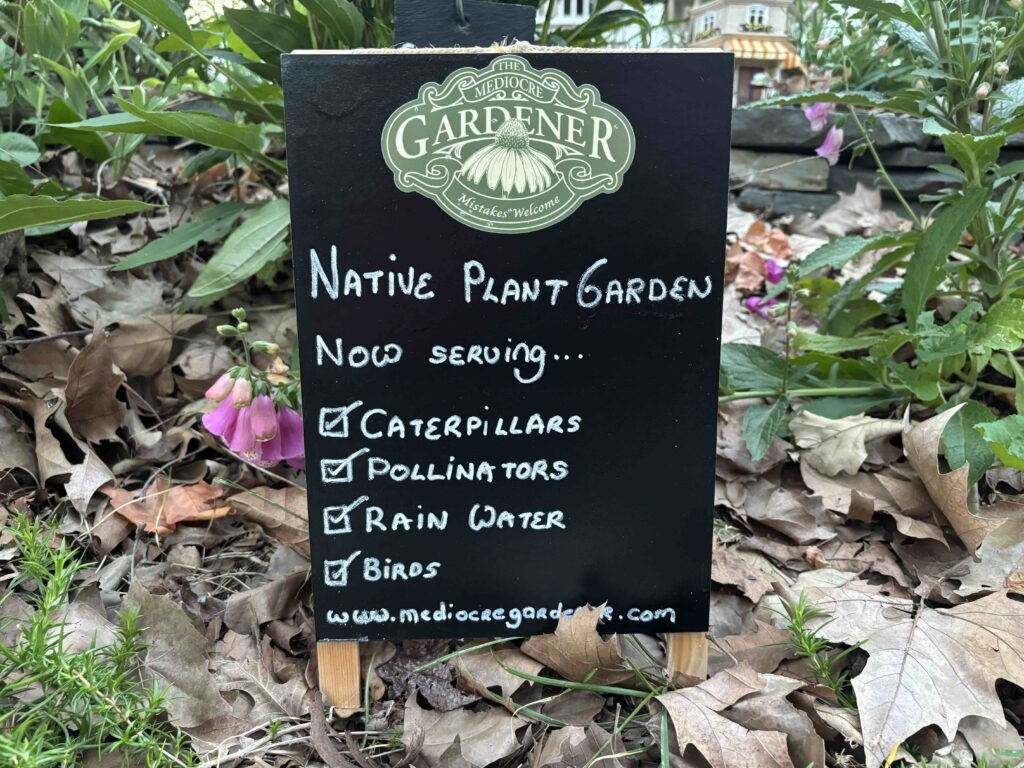
What started as one local gardener’s effort to make her own yard more useful for pollinators and nature has slowly become a small-scale native plant learning garden. There are signs, plant guides, stickers, a logbook tucked inside a Little Free Library, and four kid-friendly icons designed to help people understand what native plants actually do.
The garden belongs to Edel Howlin, the Glenside resident behind Glenside Local’s The Mediocre Gardener column. It’s a local project built around the idea that native plant gardening does not have to be perfect or intimidating to make a difference.
“I think a lot of people want to help pollinators or plant more natives, but they don’t always know where to start,” Howlin said. “The goal is to make it easier, and maybe a little more fun.”
At the center of the project are four simple phrases: Pollinator Pit Stop, Bird Buffet, Stormwater Sponge, and Caterpillar Café. Each one is meant to explain a job that native plants can do in a yard. A Pollinator Pit Stop offers nectar or pollen for bees, butterflies, moths, hummingbirds, flies, beetles, and other pollinators. A Bird Buffet helps feed birds through seeds, berries, shelter, insects, or caterpillars. A Stormwater Sponge helps soak up rainwater and slow runoff, especially in soggy areas. A Caterpillar Café is a host plant for baby butterflies and moths.
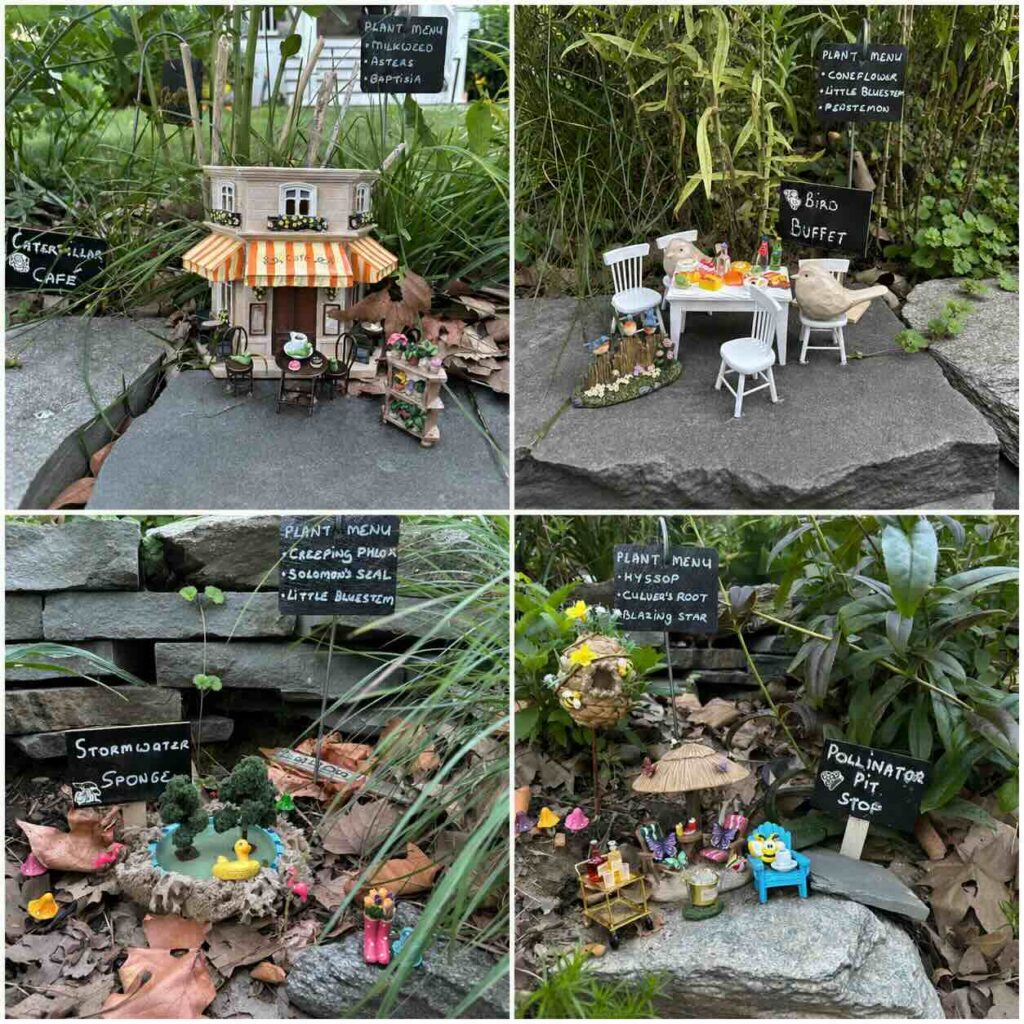
Tiny education stations, with a list of useful native plants in the Mediocre Gardener’s front yard.
The idea is simple: instead of asking people to memorize long plant lists or understand every ecological relationship at once, the icons give them an easier way in. Do you want more butterflies? Start with a Pollinator Pit Stop. Want to feed birds? Add a Bird Buffet. Have a wet spot in the yard? Look for a Stormwater Sponge. Want to support butterflies beyond the adult stage? Plant a Caterpillar Café.
“You don’t have to transform your whole yard overnight,” Howlin said. “You can start with one plant and understand what that plant is doing.”
In her own front garden, the four icons have become a way for neighbors and children to connect what they see with what is happening. Bees on mountain mint, caterpillars on milkweed, birds visiting seed heads and plant roots soaking up water after a heavy rain. One of the surprises, Howlin said, is how quickly children understand the concept.
A young child walking past the garden recently had already memorized all four icon names singing them as he skipped past: Pollinator Pit Stop, Bird Buffet, Stormwater Sponge, Caterpillar Café.
“That was the moment I thought, oh, this is working,” Howlin said. “Kids get it immediately. Us adults can sometimes make things more complicated, but kids understand a caterpillar café right away.”
The garden has attracted curious visitors well beyond the preschool crowd. Howlin said people from age 4 to 84 have stopped to look, ask questions, or talk about what they are seeing.
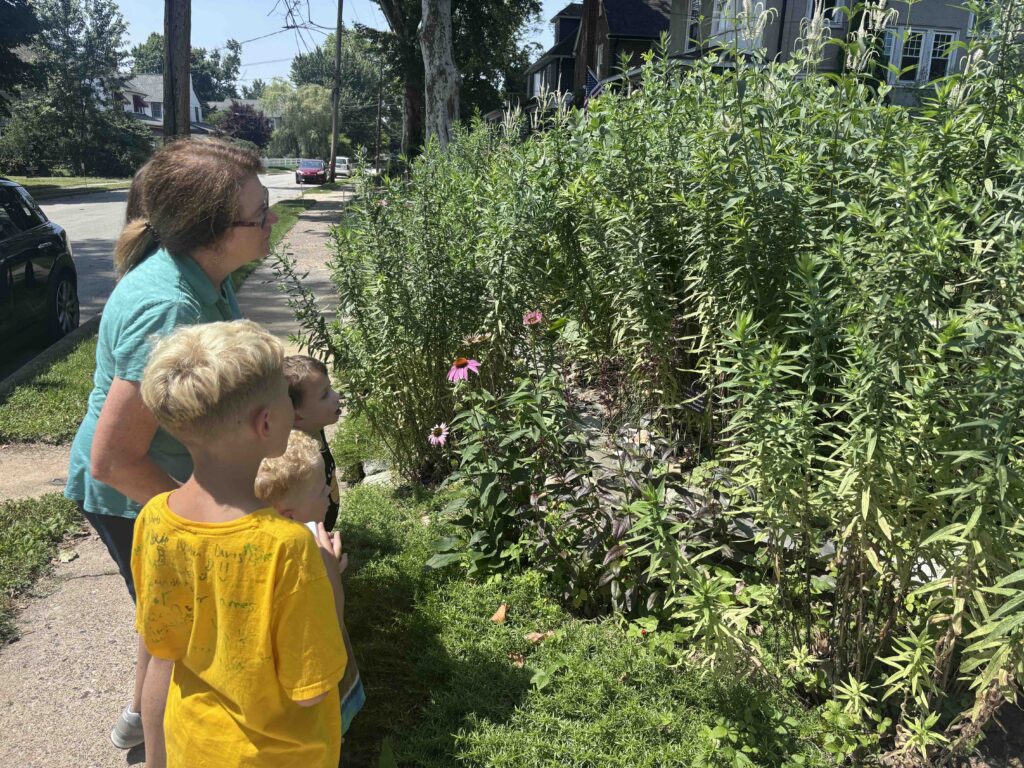
Families regularly stop by to check out the insects on the plants and write in the insect logbook.
Part of the invitation sits inside the Little Free Library in front of her home. Alongside books, visitors can find a garden logbook, stickers, and native plant guides. The logbook encourages people to write down what they notice in the garden, whether it is a butterfly, bee, beetle, bird, or mystery bug. The point is to encourage people to slow down and look more closely.
“A lot of us were taught to judge gardens by whether they are tidy, weeded, blooming, and under control,” Howlin said. “Native plant gardening asks a different set of questions. Who is visiting? What is being eaten? What is nesting here?”
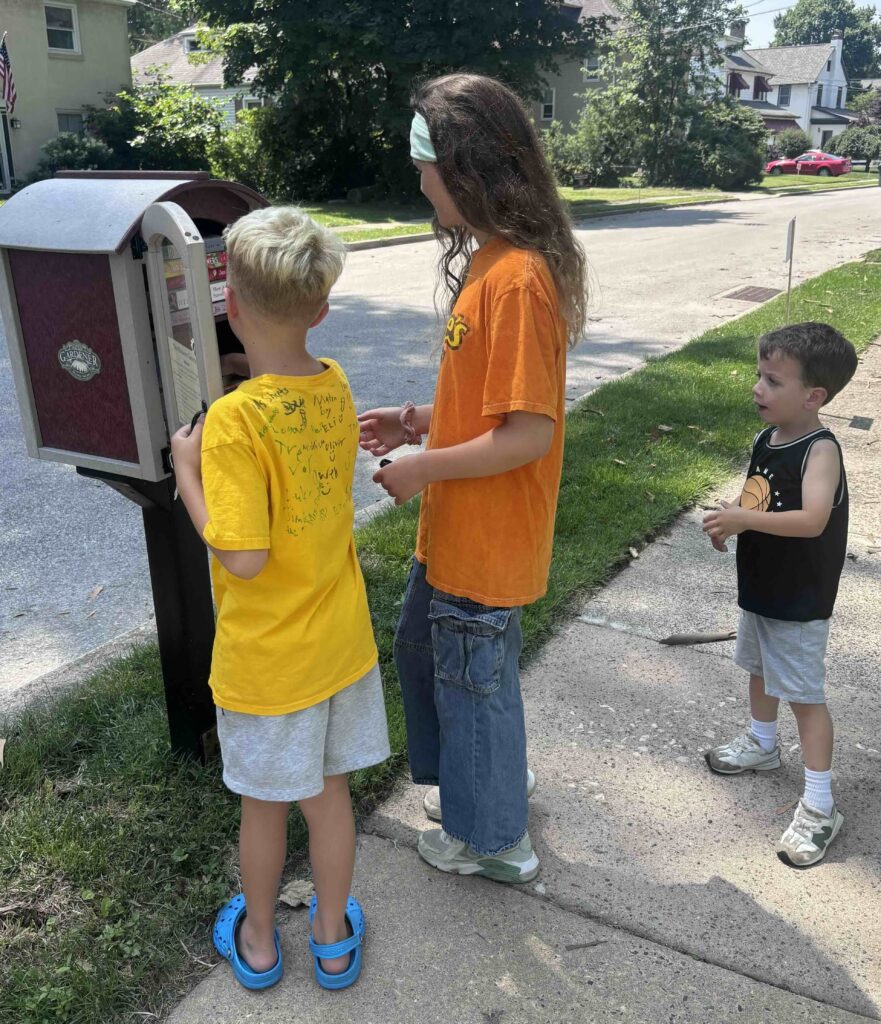
From L to R: Jimmy, Jo and Pete stop by the Little Free Library to log the insects they’ve spotted in the garden and take a sticker reward.
The same ideas are also showing up beyond her own front yard. This summer, Primex Garden Center has helped bring that same low-pressure approach to local shoppers. The Mediocre Gardener native plant guides and icons are being used at the Glenside garden center, where signs near native plants explain whether a plant works as a Pollinator Pit Stop, Bird Buffet, Stormwater Sponge, or Caterpillar Café.
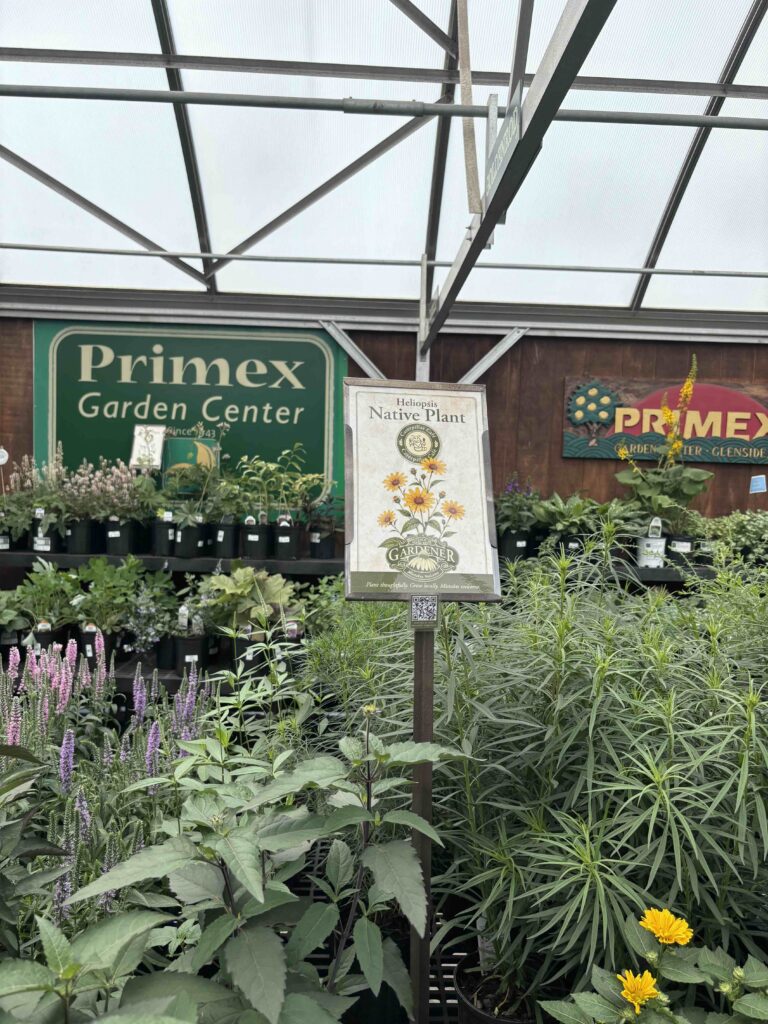
For Howlin, Primex has become an important partner because the garden center gives people a practical next step. Neighbors can walk past her front yard, see native plants in action, and then head to Primex to look for plants that can do similar work for their home.
“It creates this little loop,” Howlin said. “You see the plant in a real garden, you understand what it does, and then you can go find something similar for your own space.”
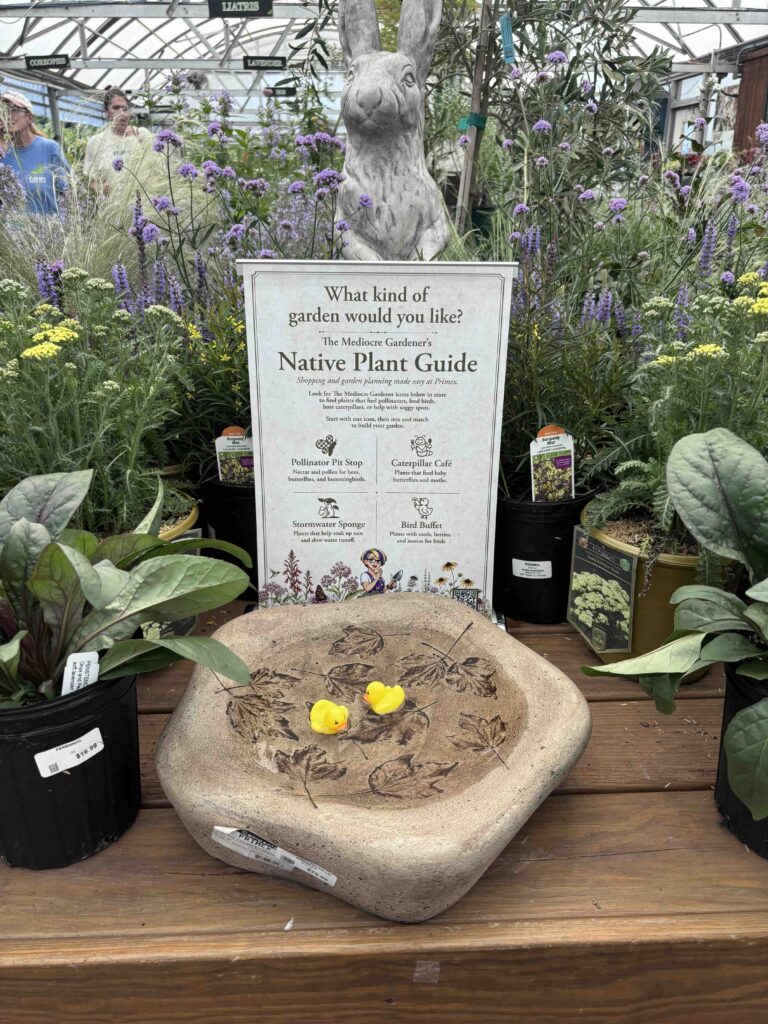
A tabletop banner at Primex Garden Center explains the four icons that make native plant shopping easier for customers.
The project comes at a time when more homeowners are rethinking what their yards can do. Native plants can provide food and habitat for insects, birds, and other wildlife, while also helping manage rainwater and supporting healthier local ecosystems. But the shift can still feel overwhelming, especially for people used to traditional landscaping. That is where Howlin believes Glenside has an opportunity. A single yard cannot solve habitat loss or stormwater problems on its own. But a neighborhood full of small, thoughtful choices can begin to add up.
One house plants milkweed for monarch caterpillars. Another leaves coneflower seed heads for birds. Someone with a soggy corner plants cardinal flower or switchgrass instead of fighting the puddle every year. A few more neighbors add native plants that bloom at different times, giving pollinators places to stop throughout the season. None of it has to be perfect. That, Howlin said, is the Mediocre Gardener philosophy. “Mistakes are welcome,” she said. “This is not about becoming a perfect gardener. It is about becoming a more thoughtful one.”
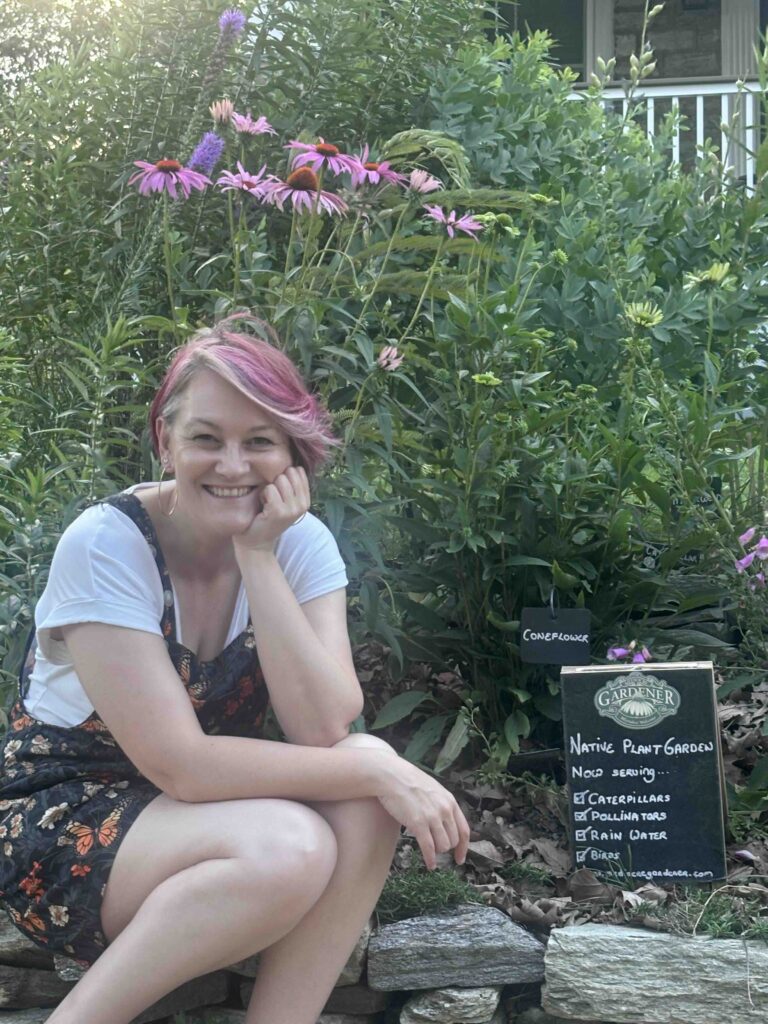
Edel Howlin, The Mediocre Gardener with her educational native plant garden.
For now, the little front-yard garden continues to grow into its role as a neighborhood classroom. One where people can see native plants doing real work. The bees, caterpillars, birds, and butterflies are not waiting for perfect gardens. They just need the right plants to show up. And thanks to these icons, maybe more neighbors will know where to start.
For past editions of The Mediocre Gardener, you can click here.
For all the latest news, follow us on Facebook or sign up for Glenside Local’s “Daily Buzz” newsletter here.