
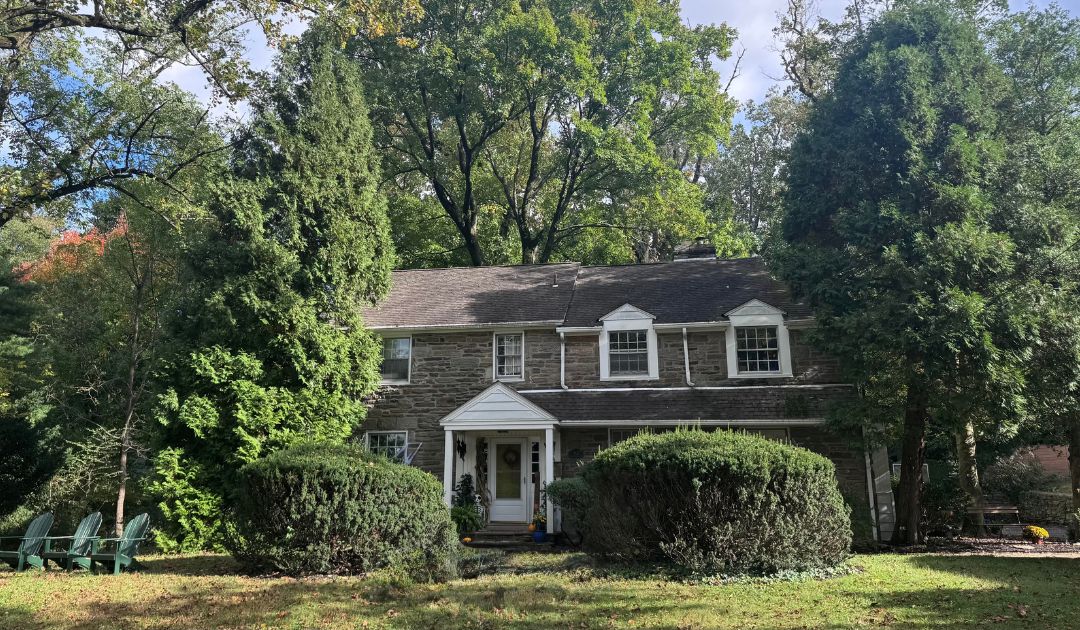
The following was submitted to the Glenside Local by Ed Stevenson for the Abington Shade Tree Commission
When electricity rates rise, we usually think about thermostats, insulation, windows, or more efficient appliances. But part of a home’s energy strategy begins outside. A well-placed tree can reduce the amount of summer heat reaching a house before the air conditioner ever turns on.
Trees that shade west-facing walls and windows can block the intense afternoon sun. Trees on the east and south sides can also provide useful shade, depending on the home’s orientation, the tree’s characteristics, and the season. Trees have a role in winter, too. Deciduous trees lose their leaves, allowing more sunlight to reach a home during the colder months when you actually want the sun to warm your house. Trees can also provide protection from winter winds when positioned appropriately.
Research has found that strategically placed shade trees can significantly reduce summer air-conditioning costs. Savings for a given house depend on the size and location of the trees, the home’s construction, and other factors.
The principle is simple. A roof, wall, or window exposed to direct summer sunlight absorbs heat. Shade reduces that heat before it reaches the house, but the best location depends on the house, the tree, and the surrounding landscape.
“We recently moved to Abington and one of the first things we fell in love with was all the mature trees that were in the yard,” said Erin Titze, Abington resident. “Not only do we notice a difference in our electricity bills in not having to run the air conditioning constantly, but our kids enjoy the benefits of all of the shade the trees provide their outside play spaces.”
Be careful of poorly placed trees as they can cause unintended problems. A tree that will eventually interfere with utility lines, crowd a foundation, or overwhelm a small space is not a good long-term investment. When planting a new tree, homeowners should consider its mature height and spread—not just its size at the garden center.
For homeowners considering a new tree, the best question may not simply be, “Where would a tree look nice?” Ask instead: “Where could this tree do the most useful work over the next 30 years?”
For homeowners who already have well-established trees, before removing a healthy tree near your home, consider what will happen to afternoon sun exposure once the canopy is gone. The change in indoor comfort—and potentially in energy use—could be noticeable.
A well-placed tree can do more than look good in the yard. It can help keep the sun off your house, make outdoor spaces more comfortable, and reduce the work your air conditioner has to do.
Under the Canopy is a periodic column from the Abington Shade Tree Commission exploring the many ways trees quietly shape life in our community. To learn more about the Commission, volunteer, or subscribe to its newsletter, email stc@abingtonpa.gov, visit www.abingtonpa.gov/192/Shade-Tree-Commission, or follow Abington Trees on Facebook.
https://www.sciencedirect.com/science/article/abs/pii/S1618866716301522
For all the latest news, follow us on Facebook or sign up for Glenside Local’s “Daily Buzz” newsletter here.
Photos: Ed Stevenson