
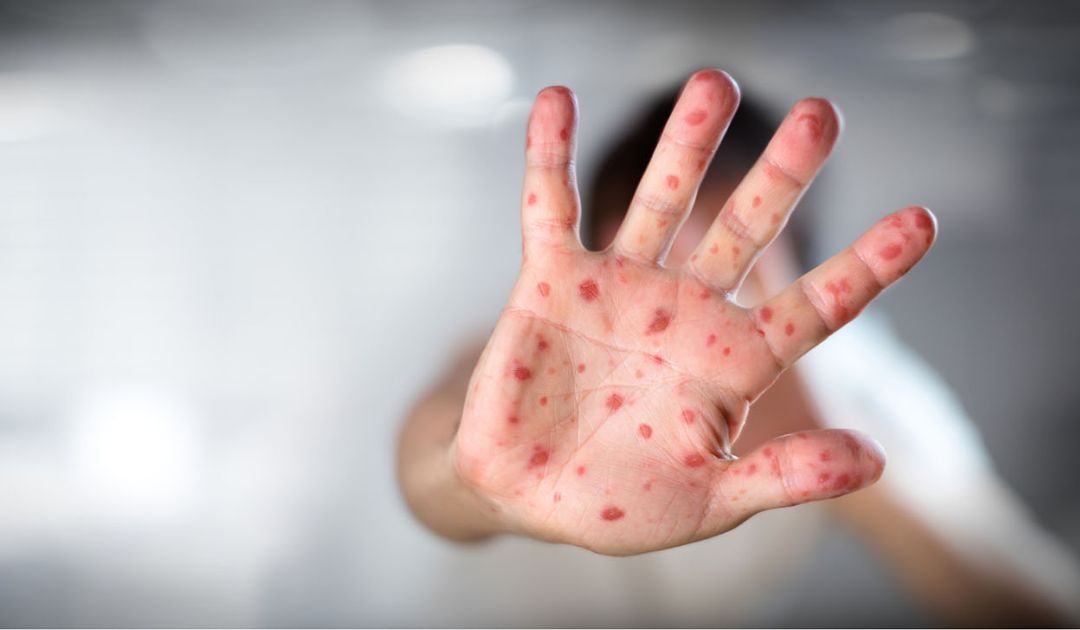
According to the state Department of Health, Pennsylvania’s measles outbreak has grown to 460 cases across 31 counties in 2026, with 36 new cases reported since Wednesday. Roughly half of those cases have been in Lancaster County.
Three measles cases have been reported in Montgomery County so far this year, but the location and timing of those cases have not been released. The Montgomery County Office of Public Health’s web page lists one case of measles reported in March 2025.
“This is obviously a deeply serious measles outbreak that we are dealing with all across the commonwealth of Pennsylvania and since my comments on Tuesday that you referenced, the situation has gotten much worse,” Governor Josh Shapiro said in Upper Moreland Township on Friday, as reported by NBC10.
On Tuesday, Shapiro outlined a statewide strategy following the Department of Health’s announcement of two “measles-associated” deaths in Lancaster County. The department has said it uses the term “measles-associated” to indicate there is evidence of the disease, but the cause of death may be due to other variables.
The Department of Health later said one of those deaths involved an infant and that the cause of death was a ruptured spleen.
“We don’t consider that a measles death,” the Lancaster County coroner said, as reported by NBC10.
The Lancaster County coroner told TribLive on Thursday that his office had not recorded any measles deaths, though he later acknowledged the disease was listed as a contributing condition on an infant’s death certificate.
“I think the Department of Health has made clear that they’ve shared all the information that they are permitted under state law to share and that those two deaths were measles-related,” Shapiro said.
Dr. Amesh Adalja, a Pittsburgh-based senior scholar at the Johns Hopkins Center for Health Security, countered Shapiro’s claim in a Substack article published Friday:
The Department of Health uses “measles-associated” when laboratory or epidemiologic evidence of measles is present but the medical certifier or coroner has not determined measles to be the immediate cause of death. That is the right epidemiologic category before a causal workup is complete. It is honest uncertainty, properly labeled.
The failure is that a hedge and a certainty were deployed by the same administration inside twenty-four hours. You cannot say “we are not yet asserting causation” through your health department and “completely preventable” through your governor and expect anyone to read the pair as coherent. Pick one and hold it. Either you believe measles caused these deaths and you show your evidence, or you do not yet know and you publish the timeline on which you will.
While state law makes most communicable disease case reports confidential, Dr. Adalja said releasing information to “prevent further deaths during an active, accelerating outbreak” is an exception.
He also noted that confidentiality was a “choice” and “was never the binding constraint”.
“The Department declined to release any detail that could identify the decedents, citing privacy as a core responsibility. Age, location, clinical course, community affiliation — all withheld,” Dr. Adalja wrote.
Dr. Adam Ratner, a pediatric infectious disease physician in New York City, told 6ABC that it’s premature to assume measles didn’t play a role in the Lancaster County deaths.
“Calling something a measles-associated death does not mean that the death was not caused by measles. It means that it is entirely possible that that death was caused by measles, and I would say likely,” he said. “And the fact of the matter is that we don’t see measles-associated deaths when there is not measles circulating in the United States, and there is measles circulating at levels that it has not in decades, as a result of declining confidence of vaccines, largely from the messaging from HHS and elsewhere in the government.”
According to the Montgomery County Office of Public Health, measles symptoms typically appear 7 to 14 days after exposure.
Health officials say people who believe they have been exposed and begin experiencing symptoms should contact a health care provider promptly. Because measles is highly contagious, calling ahead is important rather than simply walking into a doctor’s office or emergency department.
Pennsylvanians can stay up to date on confirmed measles cases, hospitalizations, deaths, community transmission, and vaccination efforts on DOH’s dashboard: pa.gov/measles. Pennsylvania residents with questions about measles can also contact the Department of Health at 877-PA-HEALTH (877-724-3258).
For all the latest news, follow us on Facebook or sign up for Glenside Local’s “Daily Buzz” newsletter here.