

Hi, Gardening Friends!
July can be a tough month for heat, August can be even tougher. Summer can really stress out the plants and test what they’re made of. So, this month, I want to talk about heat-wave gardening.
This is about paying attention to which plants handle heat better, because those plants may be trying to tell us something important. Especially as our summers keep getting hotter, the plants that can handle dry stretches are not just nice to have, they are increasingly becoming must haves.
And in very Mediocre Gardener fashion, the best answer may not be doing more. It may be learning what needs you, what can wait, and what you might need to stop fighting.
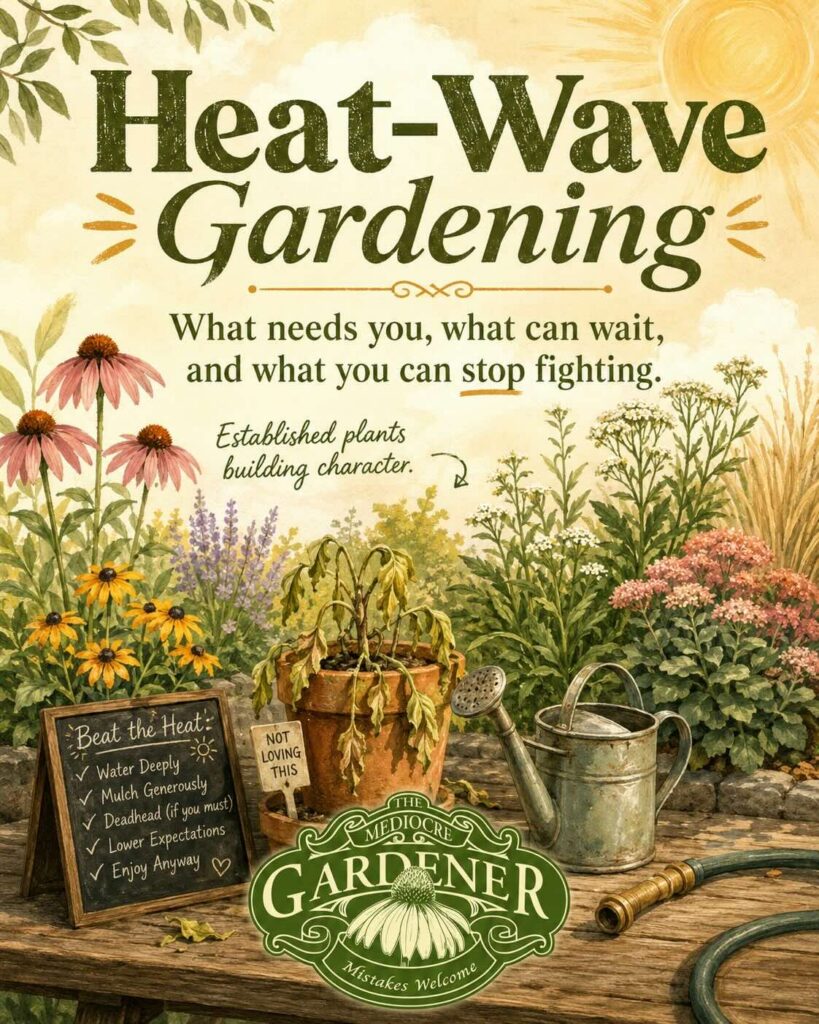
To water or not to water?
Some plants are established, with deep roots. Others are newly planted and absolutely need your help. Young trees, shrubs, perennials planted this year, and anything still trying to get settled should be at the top of your watering list. New plants do not have the root systems yet to handle long, hot, dry stretches on their own.
Also, containers. Pots are the drama queens of summer gardening. They dry out faster than plants in the ground, especially if they are sitting on a hot patio, driveway, or front step. One minute they look charming, the next minute they flop over like they haven’t been watered in days when it’s more like seconds.
When you water, try to water deeply. A quick sprinkle on top may feel enough, but it does not always get down to the roots where the plant really needs it. And yes, I know, standing outside with a hose every single early morning or late evening can be a pain in the heat. If you only have so much time, water the plants that really need you. In my garden, the established ones get left alone to battle the elements because I believe it builds character.
A note from garden expert extraordinaire Marshall Greene at Primex Garden Center that “watering with sprinklers is ok if we start to get into drought territory. It’s time efficient and is the closest thing we can do to emulate natural rain.” Thanks Marshall and if you’re ever looking for on the spot gardening advice, the staff, like Marshall, at Primex are amazing and so knowledgeable.
Enjoy the summer view
July is also a good month to pause the extras. I say this as someone who has absolutely looked at a hot, wilting garden and thought, “You know what would solve this? Transplanting them today.”
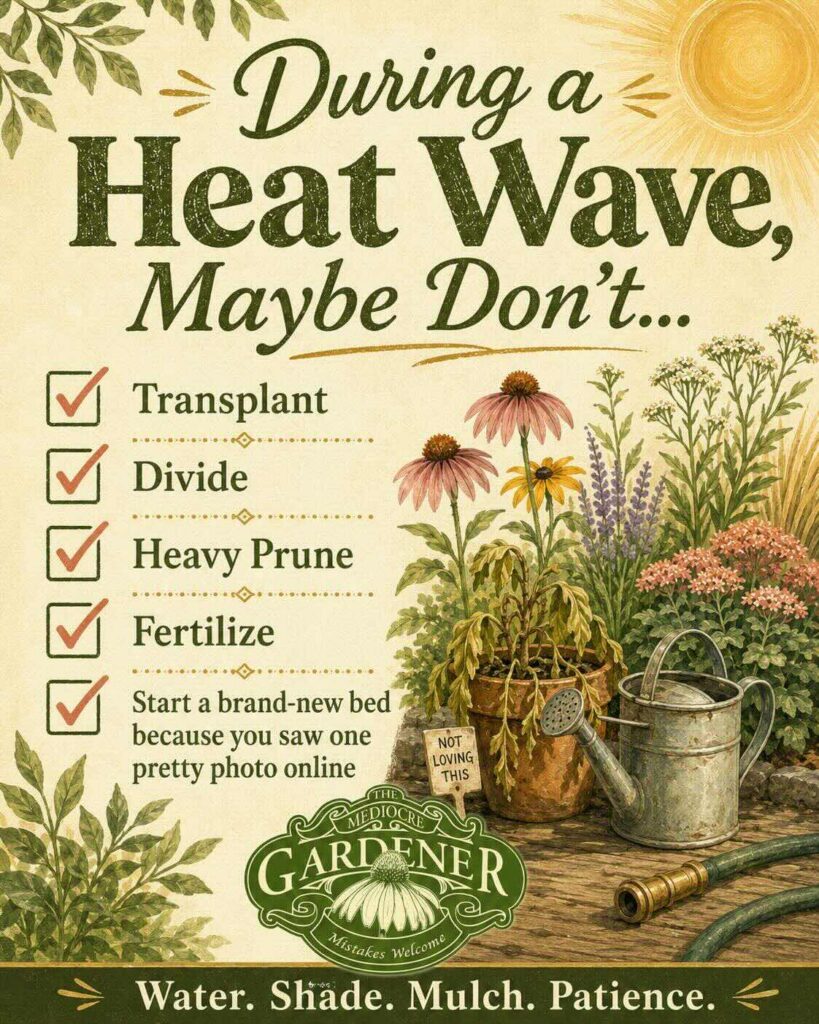
No. It would not. During a heat wave, plants are already stressed. This is not the ideal time to transplant, divide, heavily prune, fertilize, or start some enormous new bed because you saw one pretty photo online. Let the garden be boring for a minute.
If something is struggling, the answer may not be to fuss with it more. Sometimes the answer is water, shade, mulch, and patience. This is also where pots get a little more flexibility than the rest of us. If a container is baking in the afternoon sun and drying out every ten minutes, move it. Even a little afternoon shade can help. Grouping pots together can also slow down how quickly they dry out.
I know we all put containers in certain places because they look nice there. The front step. The patio. The spot where guests will admire them and think, “Wow, this person really has it together” especially if you’re sprucing things up for July 4th. But at this time of year, survival may matter more than styling.
Is that plant dead?
And then there is the hardest part of summer gardening: letting some things go. Your lawn may go brown. That does not mean it is dead. Cool-season lawns often go dormant in hot, dry weather. Some annuals may quit. Some leaves may crisp around the edges. Some plants may reveal that they were never really the right plant for that spot. That is all really useful information.
A plant that needs constant rescuing may simply be telling you, “I do not enjoy this location and would like to speak to management, please and thank you.” This is where drought-tolerant plants become important. Drought-tolerant does not mean you plant it and forget it, at least not yet. The first season you baby them a bit. Sometimes the second season is still a little “keep an eye on them.” But once they settle in, many drought-tolerant plants can handle hot, dry stretches with a lot less fuss.
And that is the dream, right? A lot of native plants are good at this because they have spent a very long time figuring out how to live here in our soil.
What this means for your garden
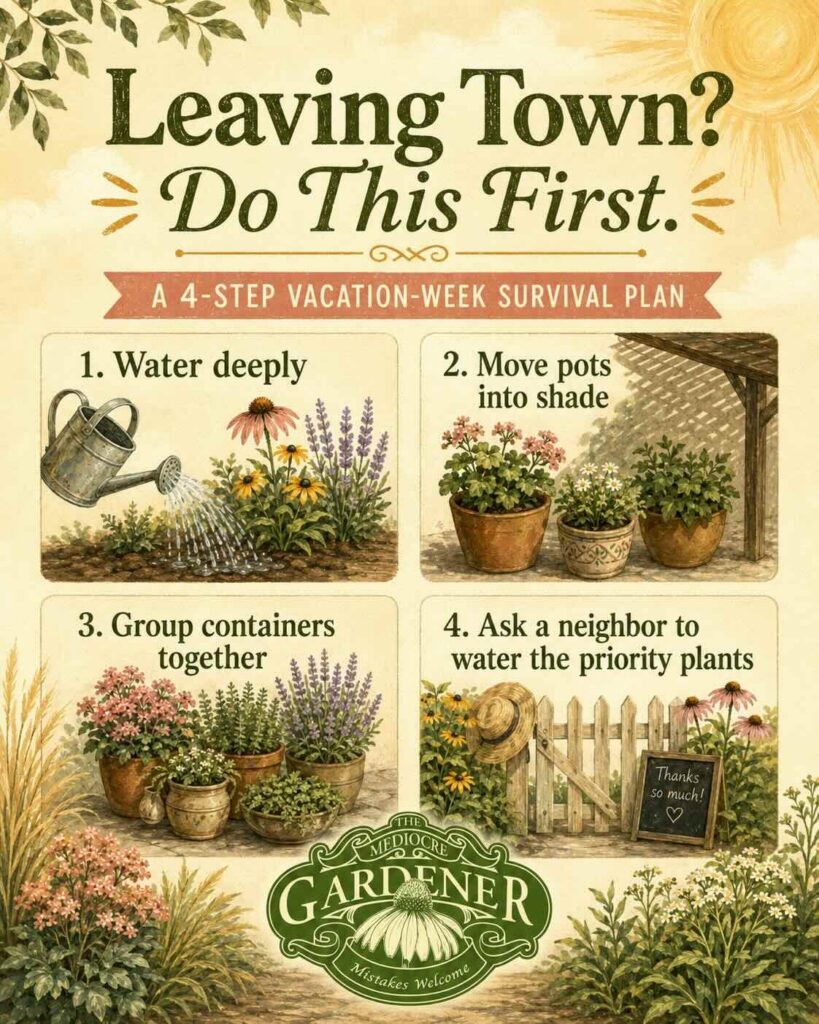
Water early in the morning if you can. Water the soil, not the leaves. Mulch helps, especially around newer plants, but do not pile mulch up against the stems. And if you are going away for a few days, do a little vacation-week triage before you leave. Water deeply. Move pots into shade. Group containers together. Ask a neighbor to water the priority plants.
Neighborhood Notes
This month’s Neighborhood Notes comes from my neighbor Mark, a Glenside resident who describes himself as “a homeowner that’s just discovering the possibilities of his yard.”
Which may be one of my favorite descriptions of gardening.
Mark did not start out as a big flower gardener. For years, he said, he mostly “mowed where the grass was and watered where some of the plants were and just hoped for the best.” Then he tried No Mow May. If you are not familiar, No Mow May is the idea that you skip mowing for part of the spring, so clover, dandelions, and other early flowers have a chance to bloom for bees and other pollinators.
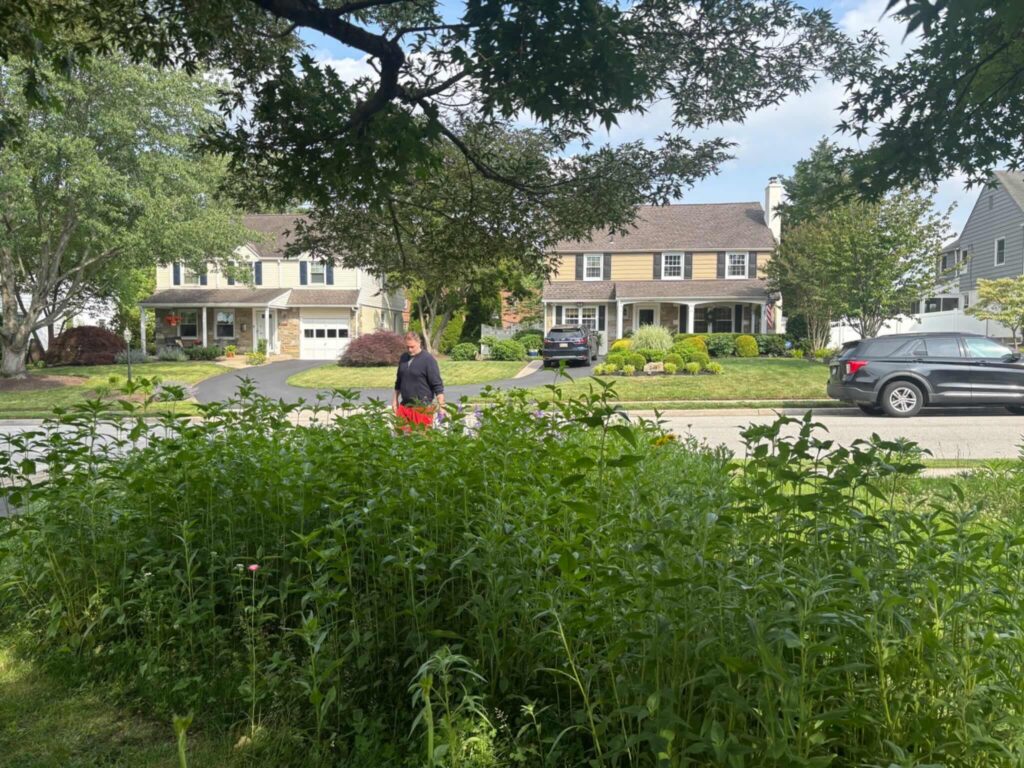
Mark walks through his meadow every single day.
It is also, very conveniently, a way to make not mowing your lawn sound like a civic contribution, which it kind of is. Mark tried it and liked what it did for the pollinators. But what really surprised him was seeing what emerged when he stopped mowing everything down.
“A lot of things I didn’t know were in the lawn started popping up,” he told me. “They weren’t all weeds. Some things were little flowers, or little odd little plants… and it was fascinating to me.”
And then, as often happens in gardening, one small experiment became a slightly bigger experiment. Mark was sensitive to the yard looking overgrown, so he started mowing borders and paths. That changed everything. Once there were mowed edges, the taller areas did not look abandoned. They looked intentional. A little wild, yes, but also planned. Or at least planned-adjacent, which is a category I personally support. Mark said that was the moment the whole thing clicked.
“It started to feel like something I could not control but influence,” he said.
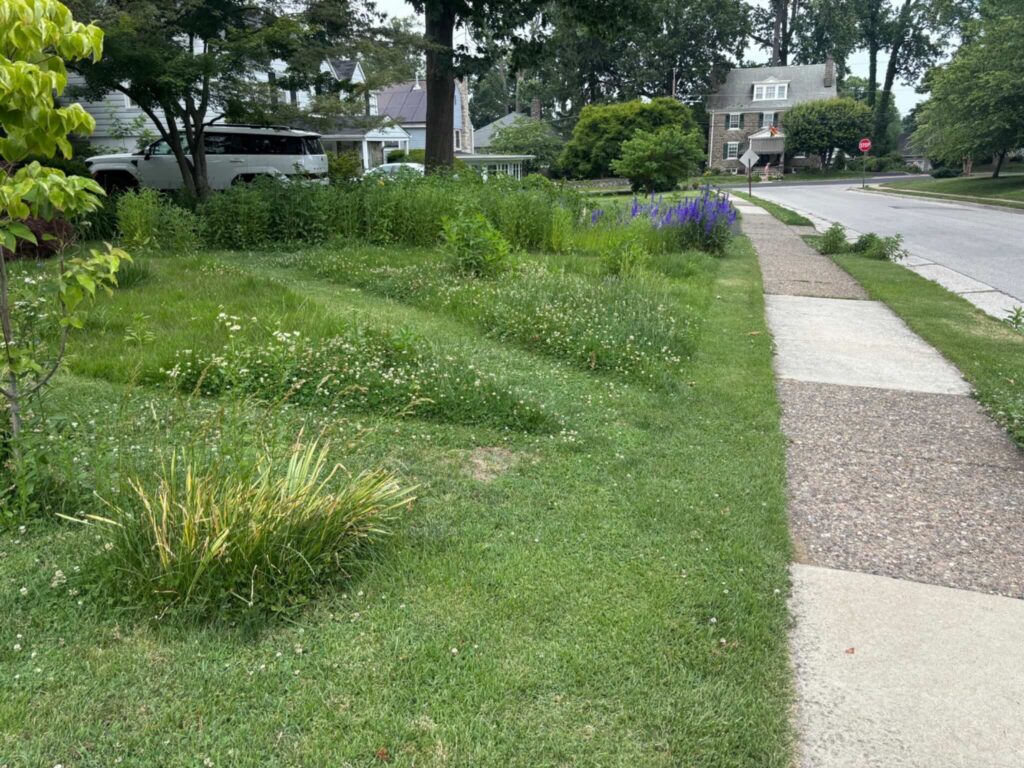
An example of how you can build a meadow in a suburban street in our community, just like Mark did.
I love that. It is such a good way to think about gardening, especially if you are trying to make your yard more useful for birds, bees, butterflies, fireflies, and all the other little creatures.
You are not fully in control. Sorry. I know some of us needed to hear that. But you can influence things. You can mow a path. You can leave a patch. You can notice what shows up. You can encourage what you like and gently edit out what you don’t.
Mark’s front yard now has mowed paths dividing sections of meadow-like growth. There are black-eyed Susans, coreopsis, fleabane, clover, larkspur, cornflowers, and, wonderfully, one pink poppy that just appeared because plants will often choose their own adventure.
There are also bees, lightning bugs, rabbits, and, according to Mark, even foxes passing through.
“It feels like a functioning little zone for beyond just the flowers,” he said.
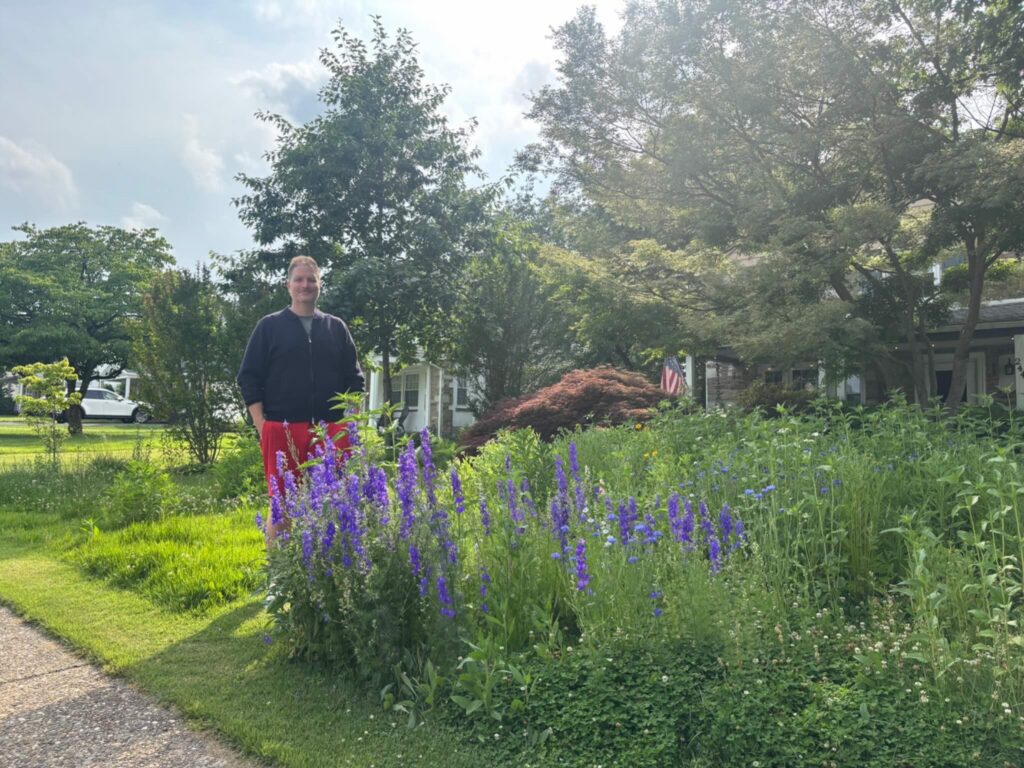
Mark with his beloved meadow.
That is what I love about his garden. It is beautiful, but it is not only decorative. It is doing something. It is feeding things, offering shelter and starting conversations with the community.
Mark said the yard has introduced him to neighbors he did not know before. People stop and talk when he is outside. His family likes sharing it too and there are always fresh flowers in the house. The front yard has become what he called “a little calling card.”
This is where meadow-style gardening gets really interesting for the rest of us. A lot of us hear “meadow” and immediately imagine chaos. But Mark’s yard shows the difference between messy and intentional. And during a hot July, that choice starts to look pretty smart.
Your turn
What’s your garden story? What did you try and it worked out better than you thought or worse? Have you attempted a meadow or left a patch to go wild with surprising results?
I’m working on a companion podcast for this Mediocre Gardener column, and I’d love to gather as many stories as possible from my wonderful gardening friends right here in Glenside, Jenkintown, Elkins Park, Roslyn, Abington, and Wyncote. Please send yours, your neighbors or friend’s story my way by emailing dearmediocregardener@gmail.com. I’m standing by and excited to hear from you!
Yours in mediocrity,
Edel
For more editions of The Mediocre Gardener, you can click here.
For all the latest news, follow us on Facebook or sign up for Glenside Local’s “Daily Buzz” newsletter here.