
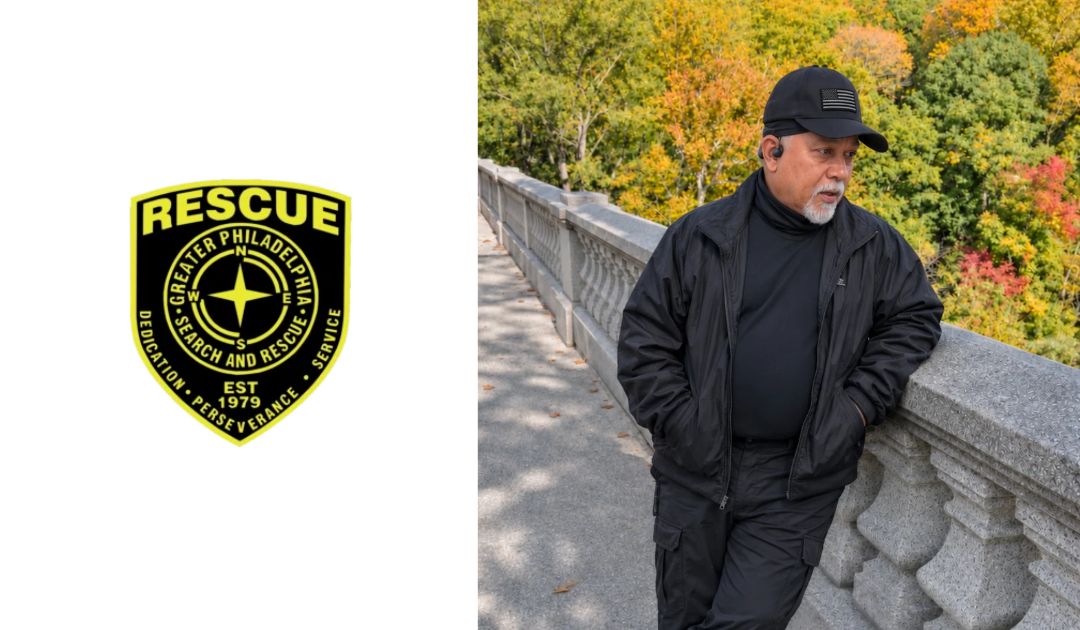
Mark G. Hopkins, a public safety officer at Arcadia University in Glenside and Chief of Greater Philadelphia Search & Rescue (GPSAR), says his line of work found him roughly 25 years ago.
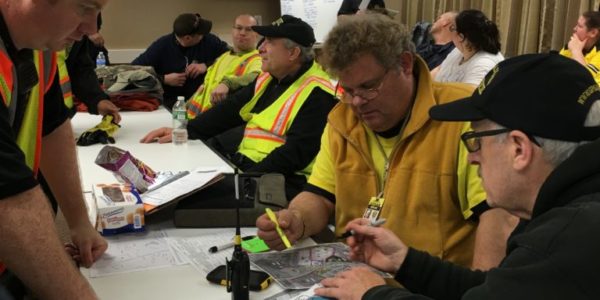
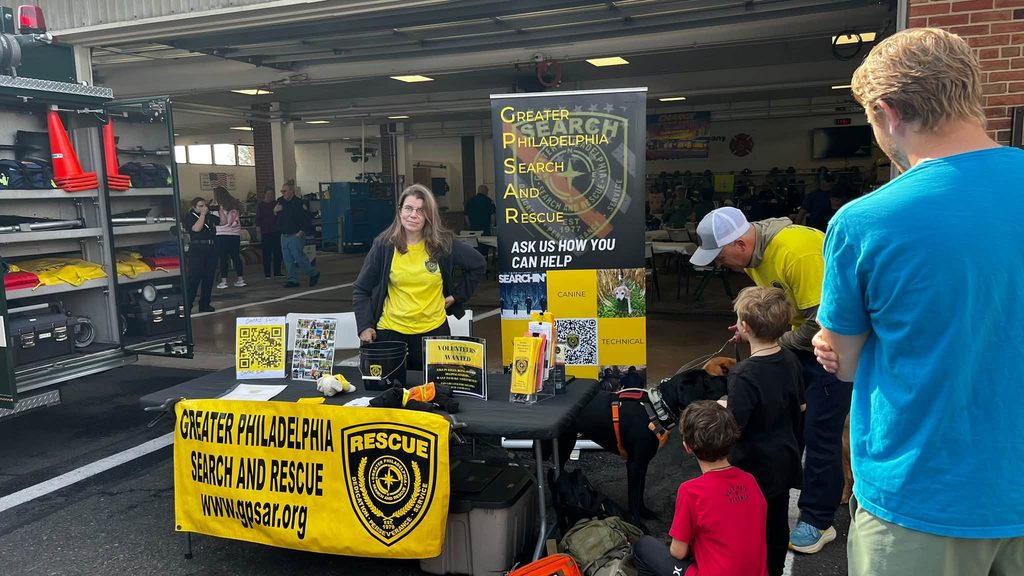
GPSAR has served the Delaware Valley since the 1970s, helping to connect authorities with missing person searches and recovery operations on a pro bono basis. The team assists with risk assessment, resource needs projection, and mutual aid planning.
Hopkins, a former a firefighter and EMT, took over right after 9/11.
“I’ve been volunteering for the past 30 years. I was an officer in 2001, and we had a change in leadership. Me and another guy were running the show. We had planned to switch off every other year, but for whatever reason that never happened,” he said. “At that time, it was more disorganized. It progressively changed for the better through a series of factors, including technology.”
The outfit’s team of 15 is trained in search skill, land navigation, logistics, and search resource allocation. Hopkins has seen first-hand how missing people generate public interest, and how that effect can sometimes be counterproductive.
“I think there are few things that match the intensity of a missing person case. People lean in and listen,” he said. “They want to participate, even in their own minds. But if you make it too big too quick, you lose control. You’re now hosting a party instead of hosting a search. That’s a problem.”
“The butterfly effect is real. You go missing and in no time 85 cops are out looking for you. Nobody’s doing the math of everything else that’s happening during a massive search in terms of cars getting broken into and things like that,” he said.
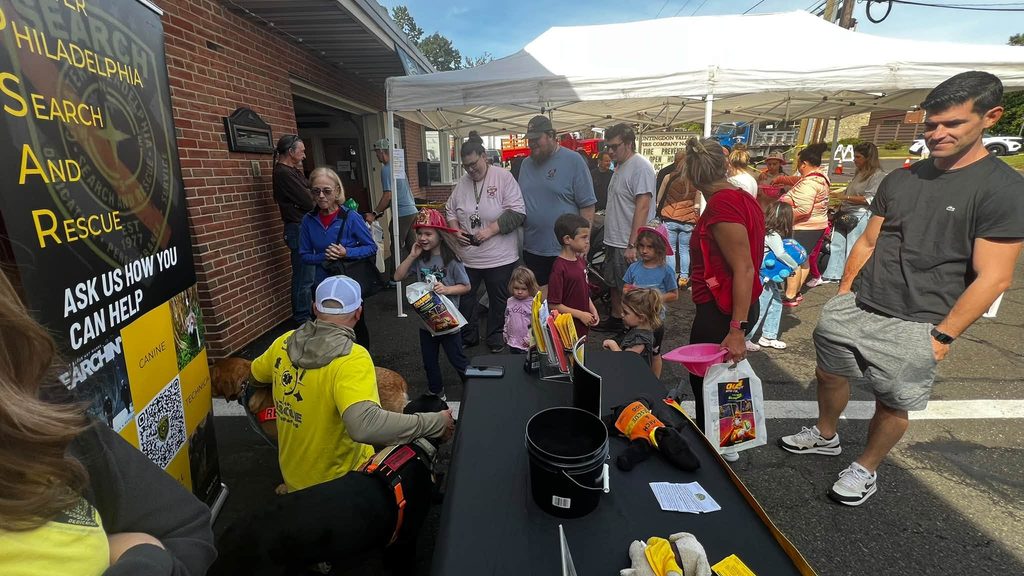
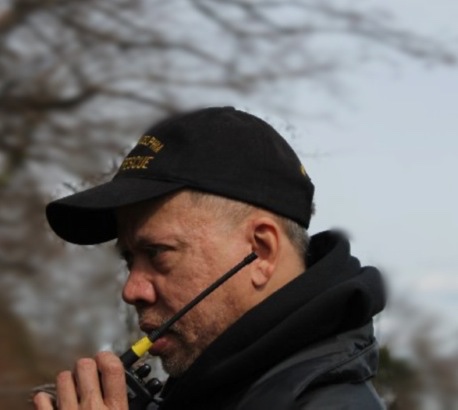
Roughly half of GPSAR’s searches end on a high note, but Hopkins—a former journalist—is well aware that people tend to remember failed searches at a higher clip. The good news, he says, is that most missing people return on their own accord.
“When you do the math, it’s about 50-50 in terms of who we’re able to find alive, but we tend to remember the bad things,” he said. “The cases where people are deceased are always more memorable. It doesn’t stick the same way.”
“80 percent of people come back on their own. When you head towards the long-term, the likelihood that someone’s still alive goes way down. If somebody’s been gone for year and you hear they’ve been found, that’s a rare unicorn,” he said. “People don’t get closure with those cases because you’re stuck in limbo. You don’t get the right to grieve and move on. We try to help them along with conversations and connect them to others who’ve been through similar situations. It has a devastating effect on families.”
Hopkins told Glenside Local his team doesn’t look for fugitives, but they do educate the public about how to deal with missing person situations in terms of law enforcement and other agencies. They also help the public understand why friends and relatives go missing in the first place.
“Our main goal is to locate lost and missing people that want to be found, including men running away before their wedding. That’s a category,” he said. “We also tell people what to reasonably expect from police and how they can help us out.”
“In Cheltenham, you have really good police officers. I think they know and care about their constituents. The average officer knows the area, and a lot of these searches don’t go on because they’re resolved. That means less work us, which I’m happy about,” he said. “The best search is the one that never really happens. The police have always been very reasonable and accommodating in terms of searches.”
According to Hopkins, Cheltenham Township has been home to a fair share of runaways, though they often make it back home after a short time. As an example, a minor who had moved to the Elkins Park area suddenly vanished in June 2025. He had ducked out on his grandparents, and it soon occurred to GPSAR that the situation may have been staged. The child was later found hiding out in Philadelphia.
“The police were helpful and nothing got out of control,” Hopkins said. “There was another incident in Elkins Park many years ago. A woman’s boyfriend kidnapped and murdered her. We didn’t know where he dumped the body, but we had a path. One of the places was the old ice rink. He was caught in New Jersey. The body was right near where he was found.”
Hopkins, a Mt. Airy resident, earned the nickname “Dr. House of Missing Persons” after helping out a colleague. The challenges of investigating have kept him engaged these past 30 years.
“A police officer’s brother was missing and couldn’t get any traction. She wanted my help. It got thrown around as a joke and it stuck,” he said. “You’re engaging both fire companies and EMS. The whole investigation part is fascinating to me. It’s like a puzzle.”
A component of GPSAR’s work is to educate parents about the do’s and don’ts of an organized search.
“If your child goes missing, parents often have an idealistic view of them that’s not realistic and not helpful. We get those from families a lot. Parents want to protect an image, which makes the individual harder to find,” he said. “The first thing is to make sure they’re not anywhere that’s going to make you look like a fool. As things get more serious, you need to have someone else take on the contact point role. You’re too invested and you’re also a suspect as a parent, a spouse, whatever. You should tell authorities the truth, then decide what to do about social media, which is a double-edged sword.”
From there, Hopkins said parents want to properly prepare for a police investigation.
“You don’t want to clean everything up. Don’t clean your child’s room. You want clothes the police dogs can smell, for example,” he said.
“The holidays are coming up, and they can be stressful. Keep your eyes on the people around you and maybe talk to them a little more. You can prevent the next search just by being aware of people’s situations,” he said. “We’re always looking for support and volunteers. We’re also looking for space. If you have a small building, we’re desperately in need of a home.”
For more on Greater Philadelphia Search & Rescue, you can visit their website and Facebook page.
For all the latest news, follow us on Facebook or sign up for Glenside Local’s “Daily Buzz” newsletter here.