

Hi, Gardening Friends!
By May, a lot of us have done enough planning to earn some kind of unofficial gardening certificate. We’ve read the articles and books, saved the social media posts, wandered around Primex, and stared at our yards like they might offer up what they’d like you to plant in them.
This is the month to stop planning and start planting. I say that as someone who knows how easy it is to get stuck in the research phase, especially with native plants. You want to help pollinators, birds, and the planet. You want those darn deer to stop eating your plants. You also want your flower bed to not look like a random yard sale of plants.
That is where a lot of gardeners get stuck. Not because there are not good plant choices, but because there is so much information and not always a simple way to turn it into an actual planting plan. Sometimes what people really need is not more reading. They need a place to start.
So, this month, instead of giving you another long list of plants, I want to give you something more useful: a flower bed you can copy in a sunny spot. Most beginner flower beds don’t go wrong because people picked bad plants. They go wrong because people picked too many different ones and never gave the eye a place to rest. The secret is repetition.
The Mediocre Gardener Starter Bed
If you’ve got a sunny bed about 6 by 10 feet, here is a very copyable plan: put three Culver’s roottoward the back, five foxglove beardtonguethrough the middle, five milkweedin front of and between them, then soften the front edge with three prairie dropseedand finish with three aromatic astersfor late-season color.
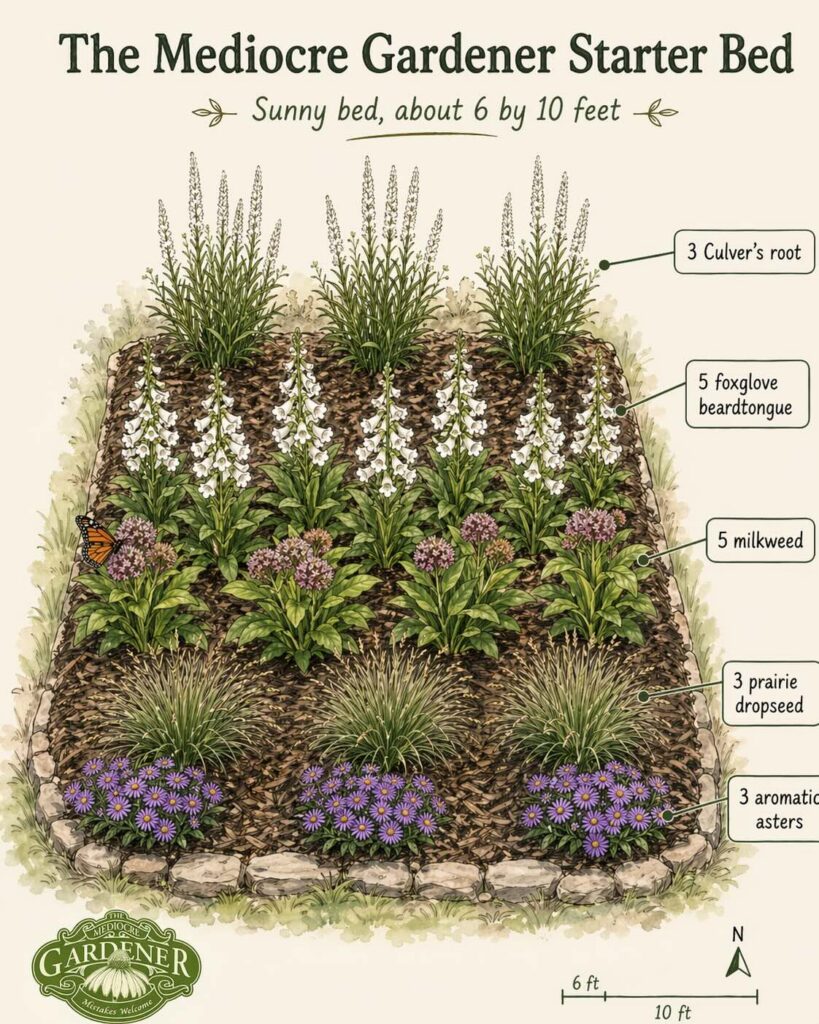
That gives you height, rhythm, and a bloom season that keeps going instead of peaking. Culver’s root brings the tall structure. Milkweed handles the bright, cheerful part as well as hosting monarch caterpillars. Prairie dropseed gives the whole thing a softer frame. And the asters make sure the bed still has some life later in the growing season.
No room for the full bed?
If a 6-by-10 flower bed is not happening this year or you don’t have the space, that does not mean you are out of the game. You can split the job. Think of it as a caterpillar patch and butterfly pots.
A small sunny patch planted with golden alexanders, foxglove beardtongue, and prairie dropseedcan handle the caterpillar part. The golden alexanders support black swallowtail caterpillars, while the beardtongue and prairie dropseed bring the whole thing together.
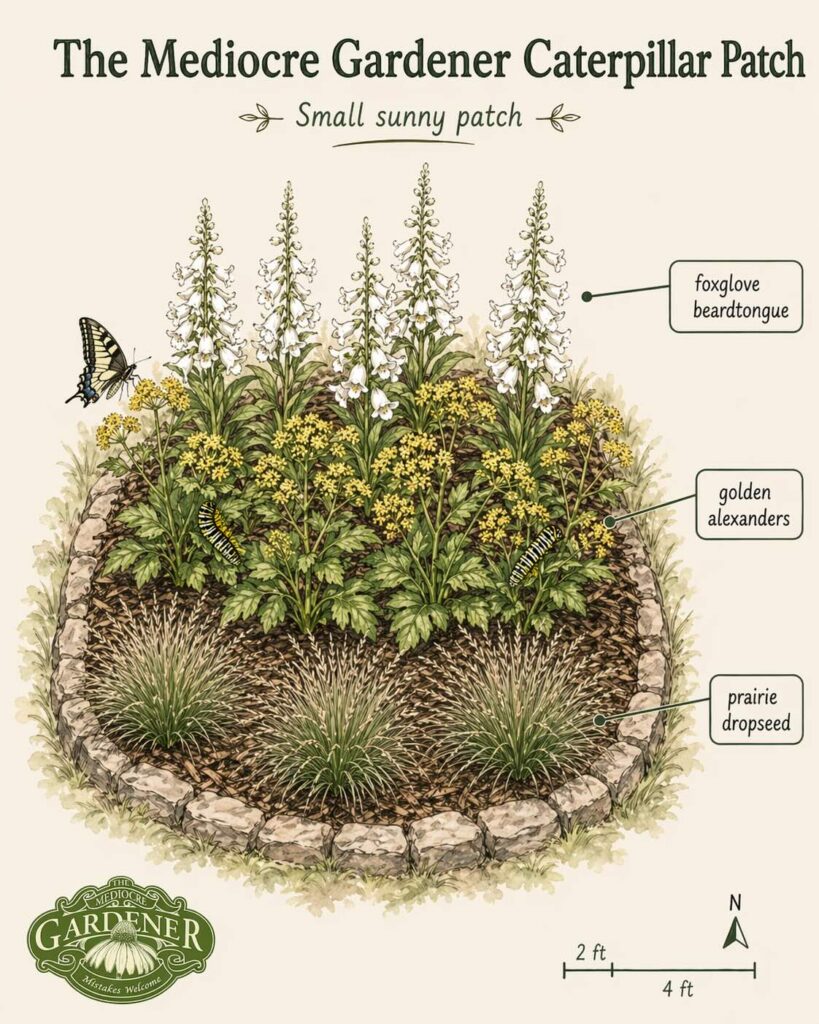
Then nearby, on a patio, porch, or front steps, you can do butterfly pots with long-blooming nectar plants that help feed the adults once they are up and flying. Think lanceleaf coreopsis, black-eyed Susan, and aromatic asterin a few large sunny containers. One space helps raise the caterpillars into butterflies; the other helps feed them.
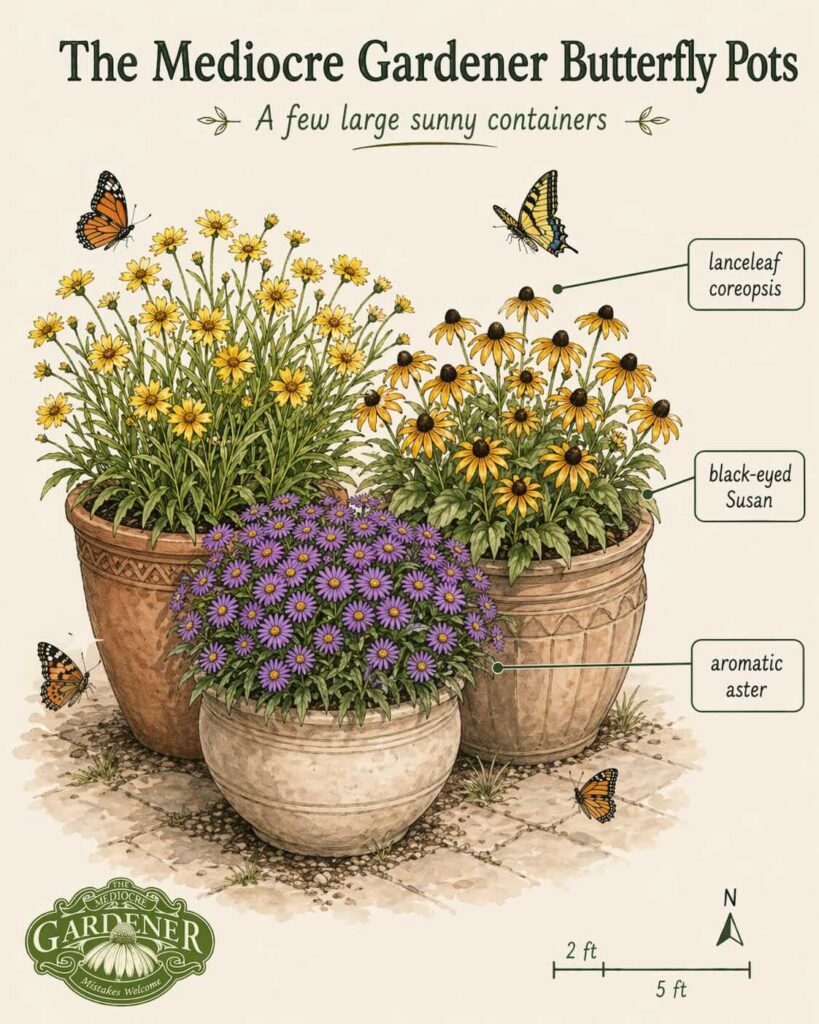
And honestly, I love this version because it feels very real-life. Maybe you don’t have one perfect open bed. Maybe you have a little patch by the walkway and a few pots near the front door. More and more, gardening is not just about curb appeal. It is about creating little pockets of habitat in the places we actually live.
That has become a theme of this whole Mediocre Gardener project, and you can learn more at mediocregardener.com. The native plant labels and shopping guide are now in Primex. They are there to make plant shopping a little easier and help connect the dots while you browse. Let me know what you think by emailing dearmedicoregardener@gmail.com or on Instagram at The Mediocre Gardener.

Neighborhood Note
If you’re planting this month, remember that you do not have to do the whole garden at once. One bed, one patch, or one pot counts. Water new plants in well and keep an eye on them through those first few weeks, especially if we get a hot stretch. And if you’re mulching around a tree, keep it light and pulled back from the trunk. Trees don’t love mulch volcanoes; they’re bigger fans of mulch donuts! I know I’d take a donut over a volcano any day.

I’d also love to hear about your small gardening wins. Did one plant surprise you? Did something survive your level of care even though you mostly ignored it? Did a bee, butterfly, or bird show up and make you feel like maybe you know what you are doing after all?
Email me at dearmediocregardener@gmail.com or tag me on your pictures on Instagram at The Mediocre Gardener. Send me your small successes. That is how this grows.
Yours in mediocrity,
Edel
For more editions of The Mediocre Gardener, you can click here.
For all the latest news, follow us on Facebook or sign up for Glenside Local’s “Daily Buzz” newsletter here.