

Hi, Gardening Friends!
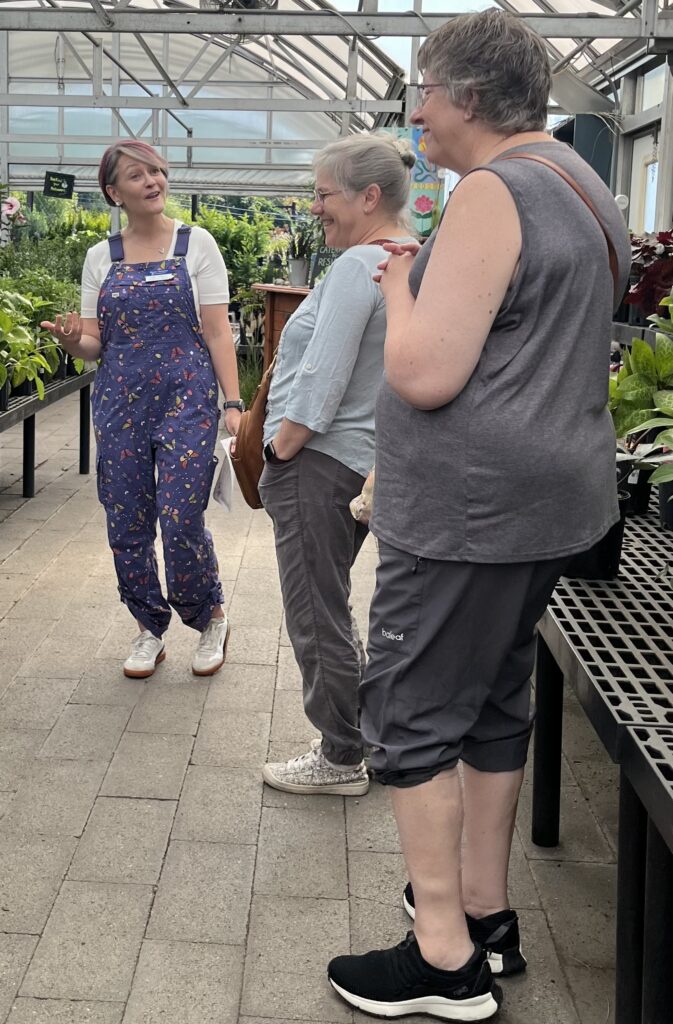
A quick note before I dig in. The lovely folks at Primex have hired me to work every Friday so I can get to know their awesome customers, this means YOU, and so I can share more about my love (maybe obsession?) of pollinators and native plants. I’ll be there every Friday until the end of June, stop by and say hi, I’ll be wearing pollinator filled overalls like the picture below.
Alright, now to the important matter of the fireflies! If you remember seeing more lightning bugs as a kid, you are not imagining it. A lot of us have that same memory, being outside after dinner, watching the yard start to blink and come alive. It felt like summer had officially arrived. And now? Some nights, it feels like you barely see any.
That is not just nostalgia setting in. Our yards have changed. We have more outdoor lights, less leaf litter, tidier edges, more spraying, and fewer of the slightly messy places where fireflies make themselves comfortable.
So, this month, I want to talk about how to get more fireflies in your yard. Not by turning your property into a wildlife preserve. Just a few small shifts that make your yard a little friendlier after dark. And while this column is mostly about fireflies, there is a bonus here: when you make your yard better for fireflies, you also help other nighttime creatures, including moths.
Moths do not get nearly enough credit. Look, butterflies get the greeting cards, bees get the good press, and moths get blamed for eating our sweaters. That feels unfair, considering many of them are out there pollinating after dark while the rest of us are inside binge watching the latest Netflix show. So if you want more fireflies and moths, here are seven places to start.
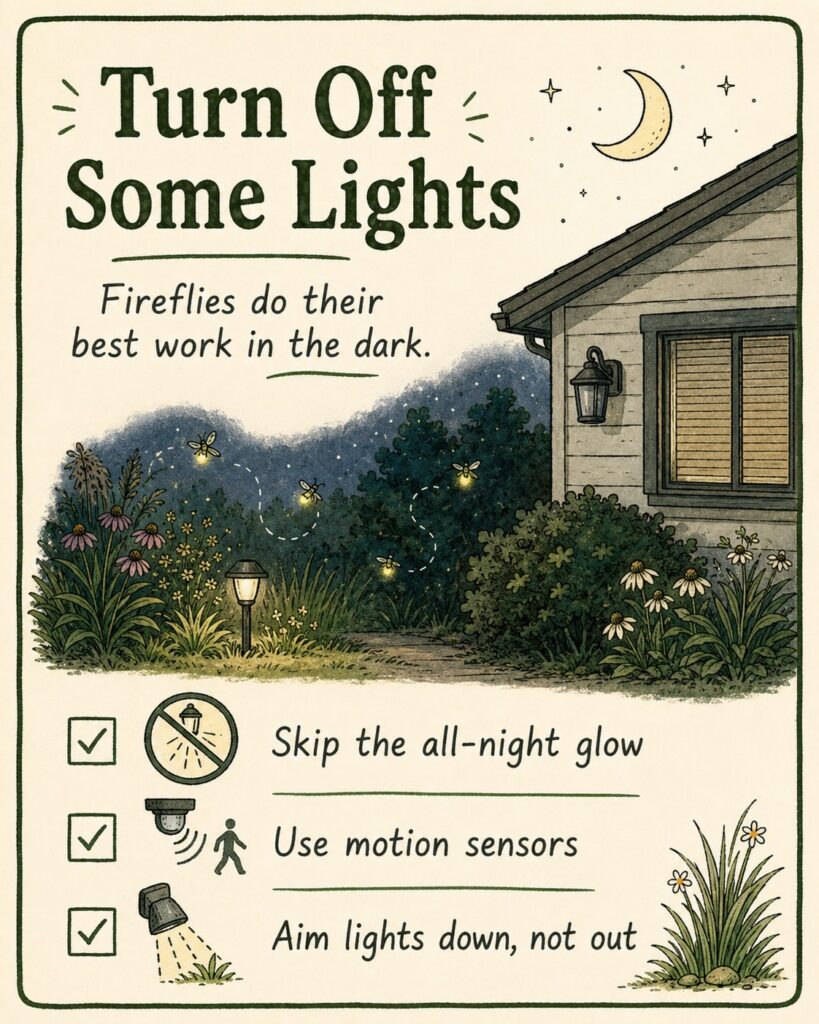
1. Turn off some lights
This is the big one. Fireflies do their thing in the dark. Their flashing is how they find each other. Which means, if your yard is glowing all night, you are not setting the romantic mood they need.
You do not have to sit in total darkness; just start with the lights you don’t really need. Use motion sensors if you want the security. Aim lights down instead of out. Close your blinds at night if indoor light spills into the yard. Basically, make your yard less like a parking lot and more like a nighttime bedroom setting.
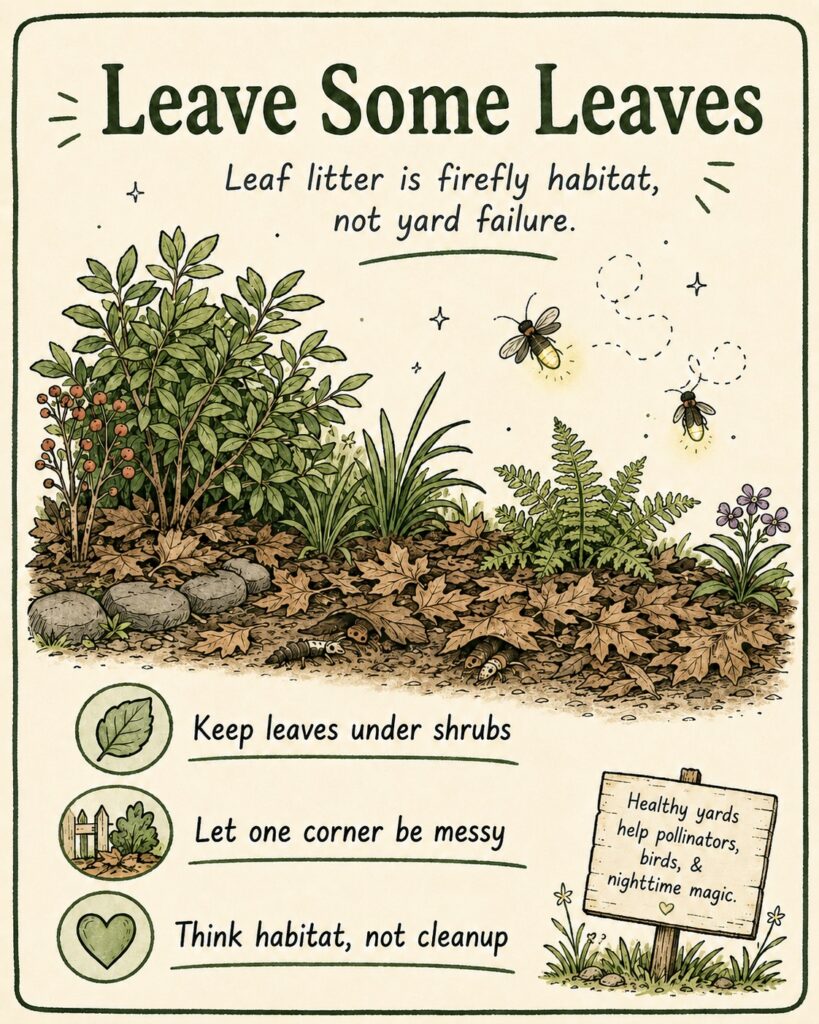
2. Leave some leaves
A lot of good things happen in leaf litter. And yes, I know, I have said this before. Possibly more than once. Possibly enough that someone could make a drinking game out of it, but it matters.
That layer of leaves under shrubs, around trees, and in garden beds is habitat. Before fireflies become the blinking adults we notice, they spend most of their lives down low, in soil and leaf litter. If we rake everything clean, bag it up, and remove every messy or untidy corner from the yard, we are taking away a lot of what they need.
This does not mean you have to leave every leaf exactly where it falls (although, if you stop by my garden, you and my neighbors may think that is exactly what I did…ahem…anyway moving on) It just means pick some spots and let them be useful. Under shrubs is a great place to start. Around trees. Along the back fence. In a garden bed you do not need to look tidy every second of the year. A true Mediocre Gardener move: doing less and calling it habitat.
3. Stop spraying everything with legs
This one is not always fun to hear, but it matters. And yes, this is another thing you may have heard me say before: if we say we want more life in our yards, and then spray every insect we see, we are kind of working against ourselves.
Fireflies are insects. Moths are insects. Caterpillars are insects. Many of the insects we barely notice are the same ones feeding birds and helping keep the whole garden going.
That doesn’t mean you can never deal with a pest problem. It just means slow down first. Figure out what is actually happening before you reach for a spray. A few holes in leaves do not mean disaster. Sometimes they just mean your garden is doing what you hoped it would do: supporting life. Annoying? Sometimes. But also kind of the point.
4. Mow less around the edges
This is not me asking you to stop mowing your whole yard. But if you want more fireflies, look at the edges: along the fence, under trees, beside shrubs, near a garden bed, or in that weird strip of grass no one enjoys mowing anyway.
Fireflies tend to like places with cover. Tall grass, soft edges, and unmowed strips give them more protection than a yard cut down to putting-green height.
Try mowing a little less in one area. Maybe widen a garden bed? Leave a strip near the back fence. Let the grass stay a bit taller around shrubs. This does not have to look abandoned. A mowed path or clean edge can make an intentionally wilder area look like a choice.
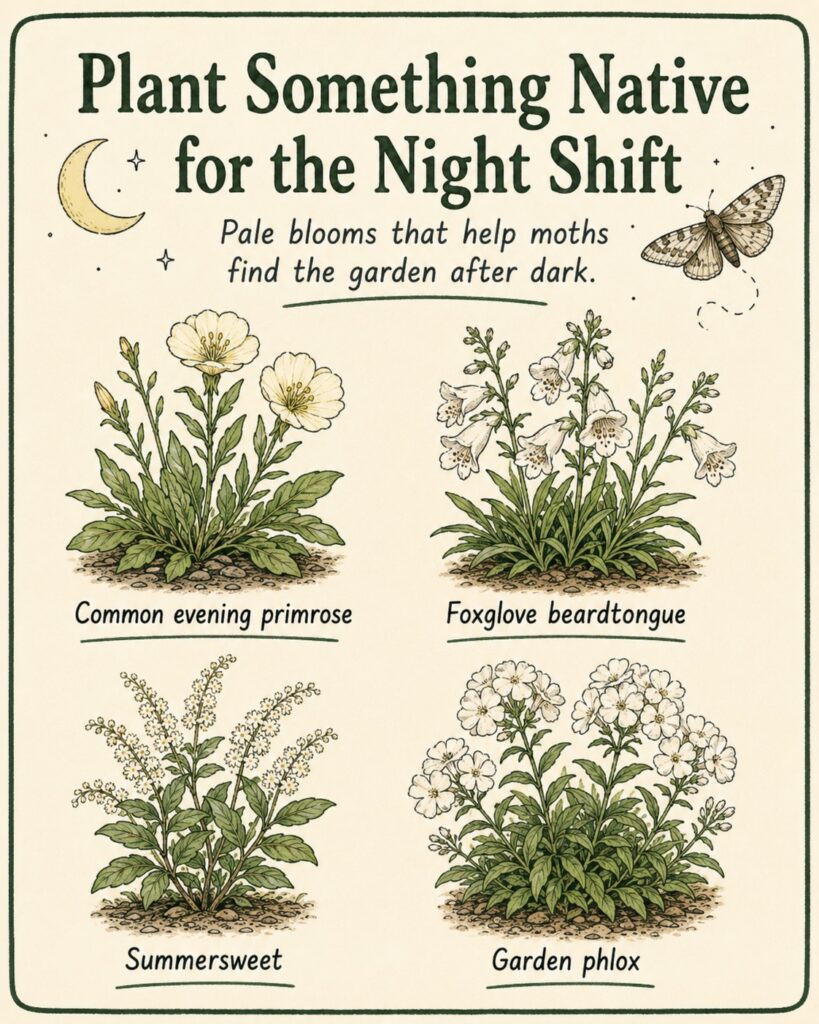
5. Plant something native for the night shift
If you are planting anyway, this is a good place to think about what happens in the garden after dark.
This column is mostly about fireflies, but once you start making your yard more welcoming at night, you are also helping other nighttime creatures, including moths. And moths deserve better PR.
Many moths are drawn to flowers that are easier to find in low light, often pale, white, fragrant, or the ones that open later in the day. And if you’re adding plants with the night shift in mind, choose natives.
A few good ones to know: common evening primrose, which has pale yellow flowers that open later in the day; foxglove beardtongue, a white-flowered native that fits nicely into a pollinator bed; summersweet, a fragrant native shrub with white blooms; and garden phlox, especially pale or white varieties (added bonus that white phlox smells gorgeous).
6. Pay attention to the damp spots
Every yard has a spot that refuses to cooperate.
The place where the grass never looks great. The spot that stays a little shady. The part where leaves collect. The corner that holds moisture longer than the rest. Instead of fighting that spot, pay attention to it.
Fireflies tend to like areas with a little moisture, cover, and protection. So the place in your yard that does not want to be a perfect lawn may actually be one of the best places to help them.
I love this as a gardening lesson because it lets you stop arguing with your yard. If a spot is struggling to be lawn, maybe it does not want to be lawn. Maybe it wants to be a firefly corner.
7. Go outside after dinner
This may be the easiest advice in the whole column.
Go outside after dinner.
Don’t weed. Don’t start a project. Don’t suddenly decide this is the right moment to drag a hose around and “just water a few things,” which is how you end up outside for 45 minutes in bad shoes. Just go look.
Look for the fireflies. Look for the darker corners where they show up first. Look at the pale flowers. See if a moth shows up.
A lot of us only pay attention to the garden during the day. But the yard keeps going after we go inside. Fireflies know that. Moths know that. We are the ones catching up.
Neighborhood Notes
This month’s Neighborhood Notes comes from Karen in Elkins Park, who shared what may be one of the most relatable native plant stories I have heard so far.
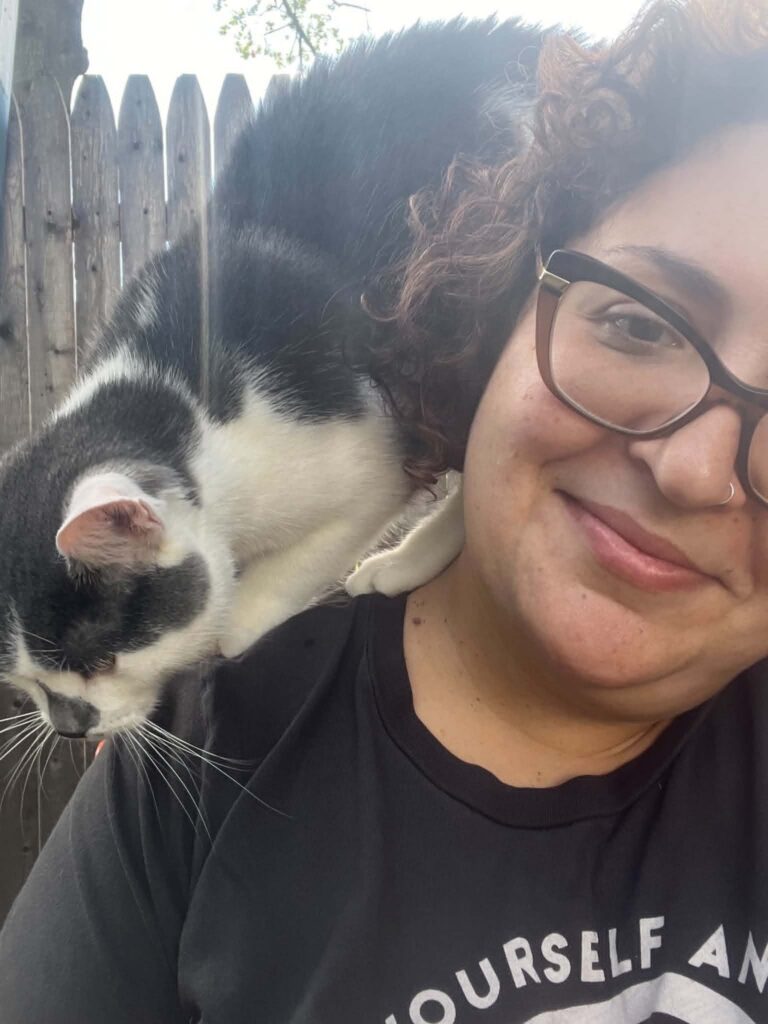
Photo courtesy of Karen: Karen with her cat Theodore, who loves to be outside in the garden.
Karen told me that when she first started learning about the benefits of planting natives, she was excited to get going. She has a relatively small yard, so she bought what she thought was Echinacea purpurea, purple coneflower.
Except it was not purple coneflower.
It was Rudbeckia laciniata, cutleaf coneflower, which can grow six to eight feet tall and spread with real enthusiasm.
Karen wrote:
“This was 3 years ago, so you can imagine how many plants I have now. They are quite impressive but definitely not the garden I had initially planned! I learned my lesson that day about researching scientific names of plants!”
I love this story because it is funny, but it is also a very good gardening lesson. Common names can be confusing. “Coneflower” sounds simple until you realize there is more than one plant answering to that name, and one of them may decide to become the tallest thing in your garden.
Karen may not have planted the garden she originally planned, but she did plant something native, useful, and memorable.
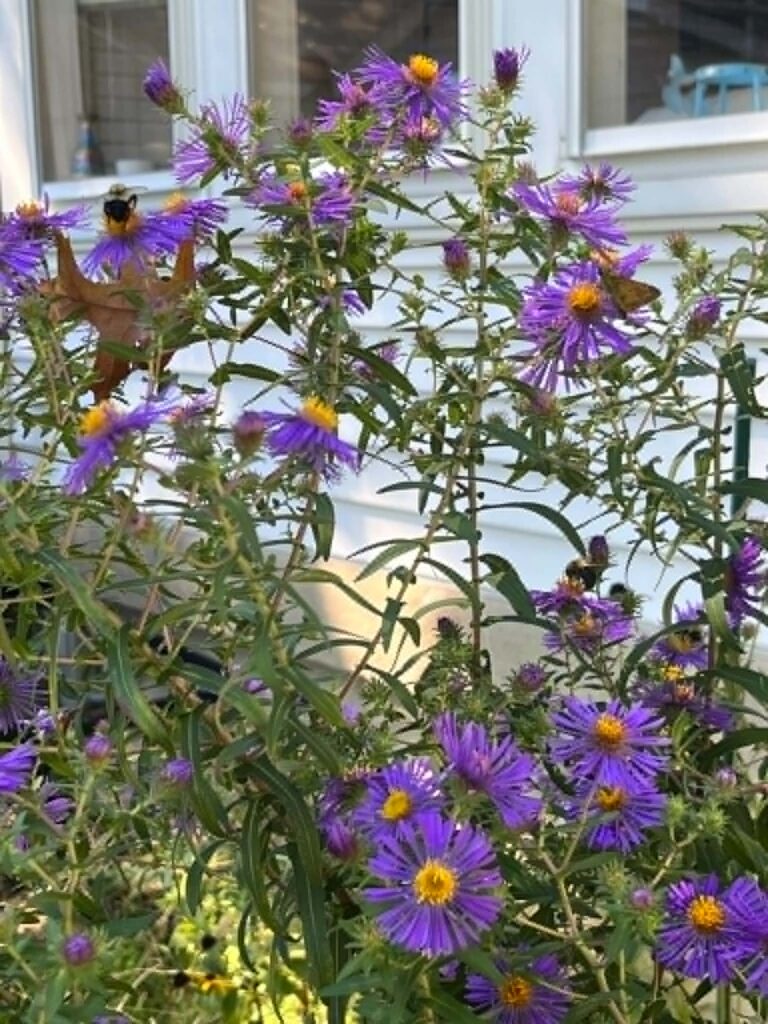
Photo courtesy of Karen: Beautiful asters in Karen’s garden full of pollinators!
Your Turn
Are you seeing more lightning bugs in your yard? Fewer? Did they come back when you stopped spraying, left more leaves, planted more natives, or turned off some lights?
Or did you accidentally plant something that took over in the most educational way possible? I would love to hear what you are noticing.
Yours in mediocrity,
Edel
For more editions of The Mediocre Gardener, you can click here.
For all the latest news, follow us on Facebook or sign up for Glenside Local’s “Daily Buzz” newsletter here.